Top Three Resources for Adoptive Parents

So you’ve decided to jump into the world of adoption. 

Maybe you’re still wading through your paperwork pregnancy. Perhaps you’re waiting on a match. Or maybe you’ve already brought your new child home. 

You’re probably dreaming of what life will be like with your new addition. If you’re anything like me, you may have one or two bio kids and think you’ve got this parenting thing down. Your kids may be (generally) well behaved, sleeping through the night, and hitting their milestones on time. How hard can it be?

You need to know that parenting children from adoption is different from parenting biological children. Adoption always involves trauma. Please read that again and let it sink in. Adoption always involves trauma.

Why is there trauma? Because even in the very best case, where a healthy birth mother has a stress-free pregnancy and makes an adoption plan that includes her child being transferred to their adoptive parents at birth, there is separation. The baby knows his mother’s unique voice and heartbeat. It is a jarring transition when he is removed from that familiar environment. 

If you’re adopting from foster care, there is likely some combination of abuse, neglect, exposure to domestic violence, and in-uterine drug and alcohol exposure in the child’s history. Getting even a young infant doesn’t mean they are trauma-free. One of our daughters came to us at six months old and already had been exposed prenatally to drugs and alcohol, and had experienced periods of neglect. This is all trauma. 

If you are adopting internationally, the child has likely experienced periods of neglect, parental loss, and possibly stressful medical care. These experiences cause permanent changes in the brain, leading to verbal/auditory processing issues, sensory problems, executive function challenges, and even learning disabilities later in childhood.

This means that we need to parent differently than conventional parenting books suggest. For example, we may use time-outs as a tool for changing behavior with a typical child. A toddler hits a sibling, and so we put him in the time-out chair for a few minutes. For a child with trauma in their background, this may trigger feelings of abandonment, compound the problem, and cause even more behavior challenges. We need to parent with brain science in mind. Here are the best resources I have found for this job.

Resources

1. The Connected Child by Karyn Purvis, Ph.D. and David Cross Ph.D. – 

This book is invaluable to any adoptive parent, even if you’ve had your child home for years. The basis is Trust-Based Relational Intervention (TBRI), a way of relating to children based on meeting their physical and attachment needs and learning ways to calm fear-based behaviors.

The authors cover the brain science behind our children’s behaviors and offer practical advice for handling it. As the title suggests, it places a significant emphasis on connection, believing that a child wants to do well and will do their best when they feel safe and securely attached to their parent. 

It covers concepts like felt safety, the IDEAL response, and re-dos. It has suggestions for supporting the child’s sensory needs to (support) cooperative behavior. It emphasizes mutual respect: speaking to your child with respect and teaching them how to communicate with others with respect. 

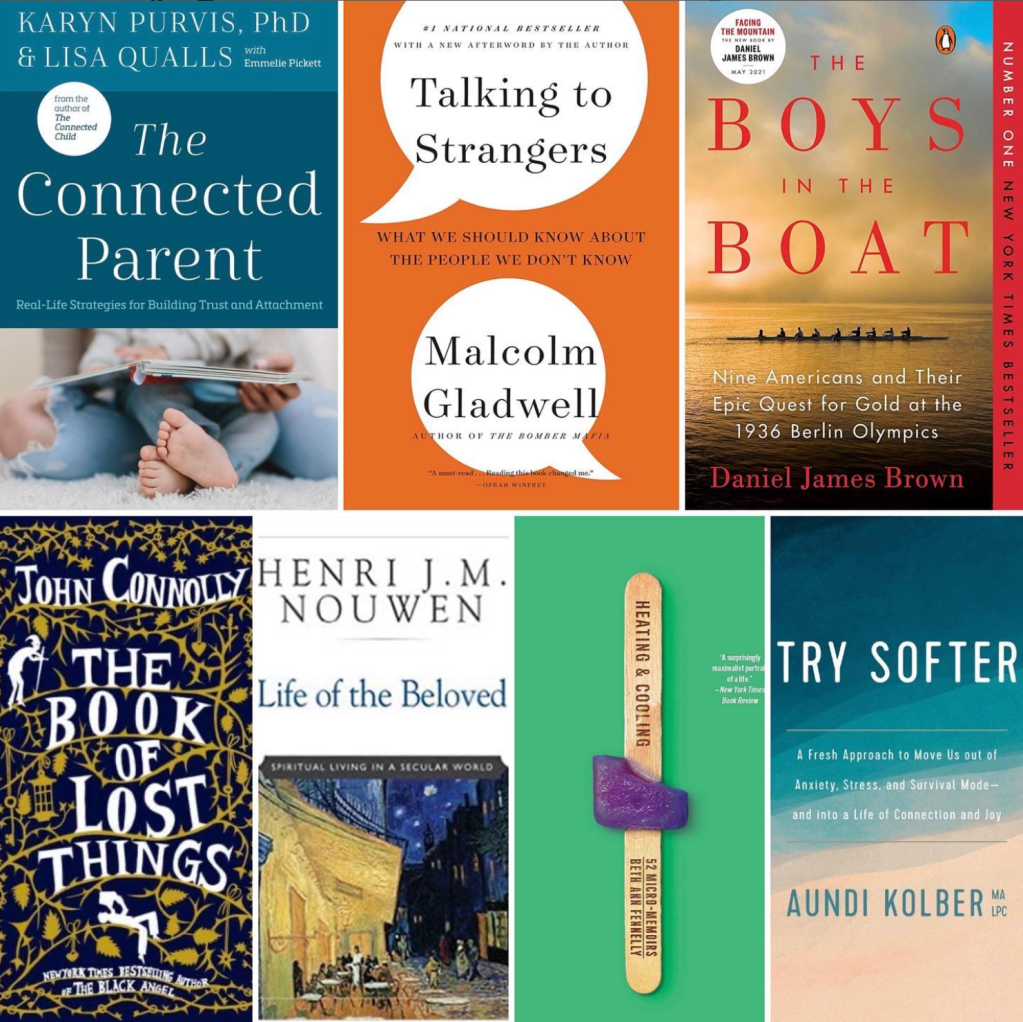
2.The Connected Parent by Karyn Purvis, Ph.D. and Lisa Qualls

This book is similar to The Connected Child in that it uses the same TBRI principles, but the emphasis is on walking the techniques out on a day-to-day basis. It is co-authored by Lisa Qualls, a foster parent and mom to twelve children by birth and adoption. She has lived these principles out with her children for the past fifteen years, so she understands how hard it can be. One of the best aspects of this book is the idea of using scripts with our kids, which are short phrases aimed at redirecting children to better behavior. They really work every time we use them. 

What struck me most about this resource is that the authors don’t just give advice for the kids but also offer grace for the parent. They remind us that this journey of parenting adopted children is a marathon, not a sprint. If we are to parent well, we need to keep our needs in mind and even seek professional help if we need it. 

3. What Happened to You? by Bruce D. Perry, M.D., Ph.D., and Oprah Winfrey

The longer I parent, the more I realize how my upbringing affects my parenting instincts and decisions. Sometimes we don’t realize how our adverse experiences unconsciously inform how we parent. This book dives deep into the brain science behind behavior and offers wisdom for dealing with our own and our children’s issues.

I listened to the audiobook version and enjoyed the back and forth conversation between Perry and Winfrey. But I also got the hardcover version to take notes and mark it up. It is so full of valuable information!
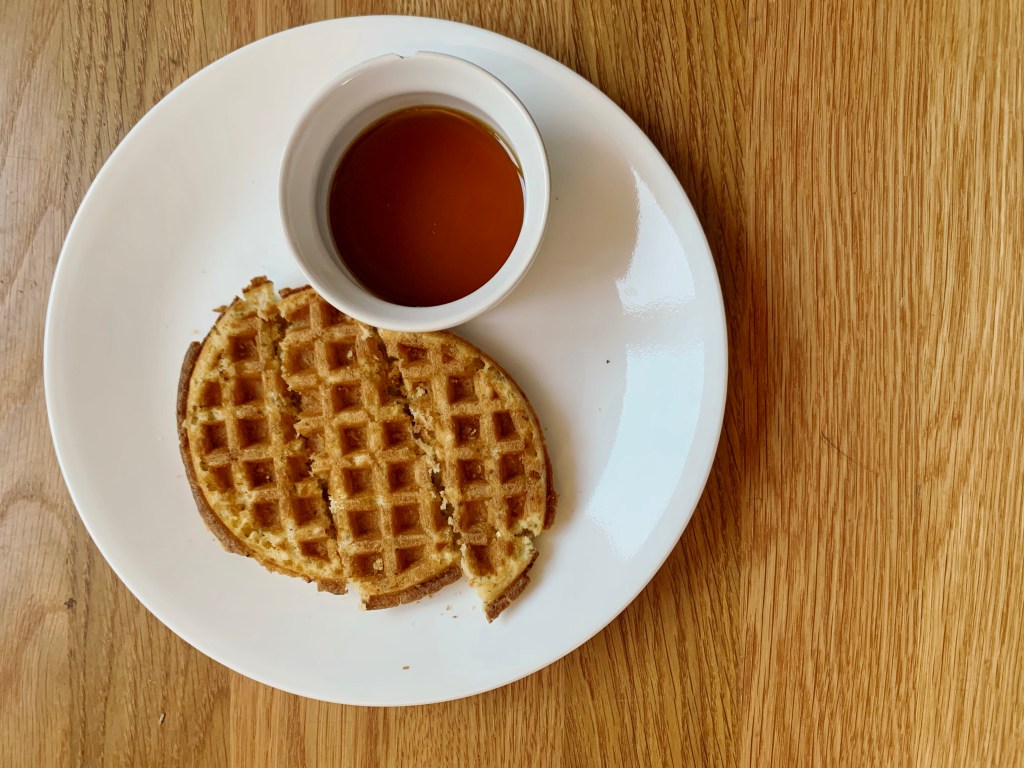
Trauma and a Waffle.

Many people think that when you adopt a child as a young baby and give them lots of love and attention and do all the right things to form a healthy attachment, that it’s enough to cover any problems.

What a lot of people don’t realize is that problems begin before the child even breathes their first breath. A mother’s stress hormones during pregnancy affect her child’s brain development immensely. Drinking alcohol during pregnancy physically damages the brain and creates an injury that lasts a lifetime.

This innocent waffle caused an hour-long rage before school this morning because it wasn’t the right color or texture.

My child has a difficult time regulating her emotions and so very small things become VERY BIG THINGS. It’s tempting to assume “Oh, they’re just being a brat” or that their behavior is a result of some failing on my part as a parent.

The more I learn about trauma and brain science, the more compassion I can have for my child and the more I can show her patience. It’s not easy and I’m always learning more.

The Connected Parent” by Karyn Purvis and Lisa Qualls has been an amazing resource, as well as watching TBRI videos on YouTube.

November Reads

November Reads… It was a good month for reading! About half these titles were read thanks to my new noise-cancelling headphones and the Libby app where you can borrow audiobooks from the library. 

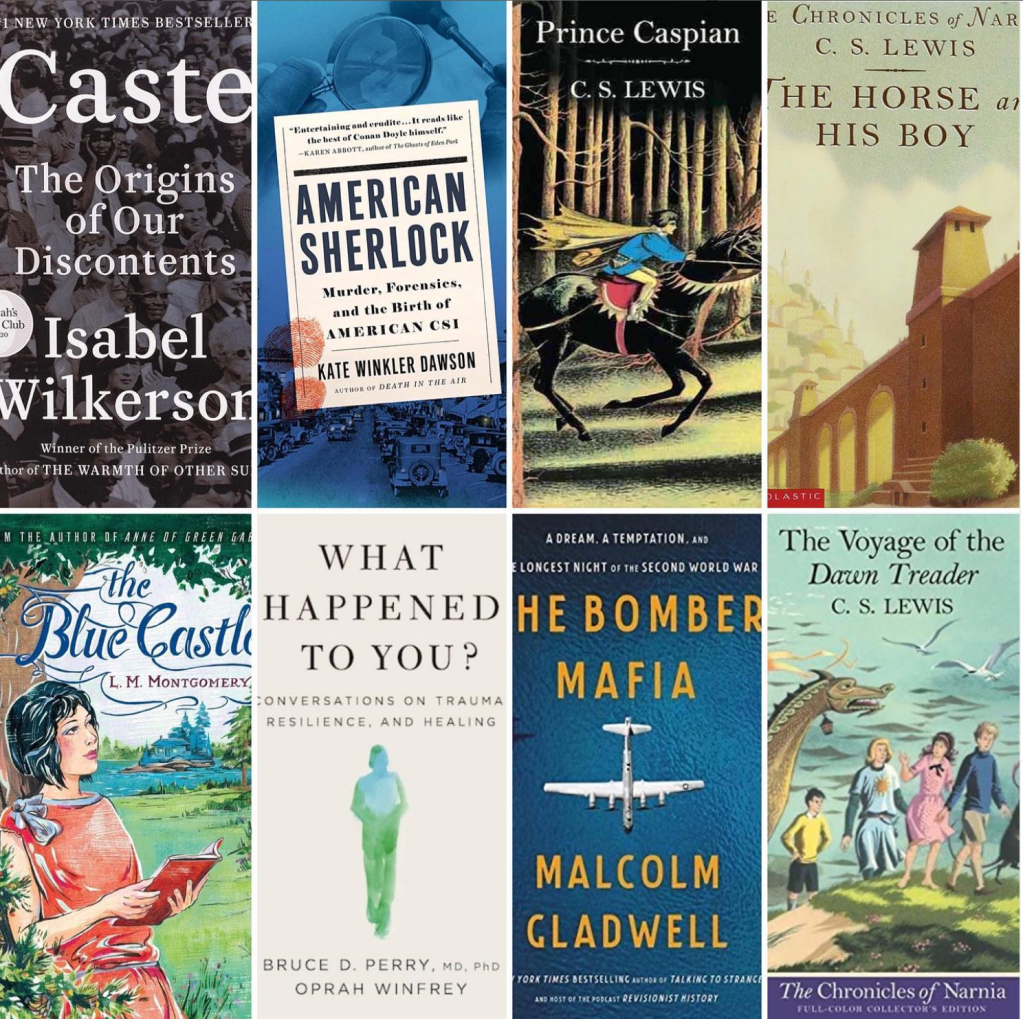
Caste by Isabel Wilkerson — I actually didn’t know what this book was about before I started it. I vaguely assumed it was about the Indian caste system, perhaps explaining how the system kept its structure even after immigration to the US (maybe a good idea for a book?). Instead, it was about how racism in America is actually a caste system. Consider this quote: “Caste is the granting or withholding of respect, status, honor, attention, privileges, resources, benefit of the doubt, and human kindness to someone on the basis of their perceived rank or standing in the hierarchy.” It was definitely eye-opening and was a further course in my education on issues of race in our country.

American Sherlock by Kate Winkler Dawson — A fascinating history of the origin of forensics. It was mostly about Edward Oscar Heinrich, a brilliant and obsessive scientist at The University of Berkeley. I found myself equal parts in awe at his genius, but also a bit sad for his neglected family.

The Chronicles of Narnia: The Horse and His Boy, Prince Caspian, The Voyage of the Dawn Treader by C.S. Lewis — I’ve so enjoyed rereading the Narnia books. I read The Lion, the Witch, and the Wardrobe as a young child, and then the whole series in college fifteen years ago. My experience with reading childhood books over again is that you never really grow out of them, but rather grow into them. I’m amazed at how richer they are after reading them as an adult. I hope to finish the series in this upcoming year.

What Happened to You by Oprah Winfrey and Bruce D. Perry — I highly recommend this book for anyone interested in the brain science behind trauma. It’s been so helpful in understanding my kids with trauma backgrounds. But anyone with abuse, neglect, and trauma in their childhood will benefit.

The Bomber Mafia by Malcolm Gladwell — I absolutely love learning about things I know nothing about. I’ve loved every Gladwell books I’ve read. I knew absolutely nothing about the air bombing campaign of World War II, and I learned a lot about it. There are some critical reviews for this book, saying it’s long-winded, or pointless. I think it’s an enjoyable read if you don’t take it as seriously as a history textbook.

October Books

The Connected Parent by Karyn Purvis PhD and Lisa Qualls — This is the follow-up book to The Connected Child, also by Karyn Purvis, released about 13 years before, which had become the basic handbook for adoptive parents. This new update has much of the information as the first book, but with the added benefit being co-written by a mom who has lived through years of the experience of raising challenging adopted children. It’s a book that I read about twice a year and always come back to when I’m at my wit’s end and need encouragement. An absolute must-read for foster and adoptive parents.

Talking to Strangers by Malcolm Gladwell — I totally judged this book by its cover, and thought it was about something along the lines of “how to talk to people you don’t have much in common with.” It turned out to be much more fascinating than that, and in the months since I’ve read it has actually been valuable. Gladwell explores concepts like truth default, why we believe liars, and how knowing more about someone doesn’t mean you are a good judge of character. In fact, it’s more likely that the more you know someone, the less reliably you’re able to judge their character. Here’s a quote: “You believe someone not because you have no doubts about them. Belief is not the absence of doubt. You believe someone because you don’t have enough doubts about them.” I listened to this on audiobook and it was a great listening experience.

The Boys in the Boat by Daniel James Brown — From my favorite genre of narrative nonfiction, this book is about the US Olympic Rowing team that went to the 1936 Olympics. It was a fascinating look at the courage it takes to be a champion rower, and also the politics of WWI and WWII.

The Life of the Beloved by Henri Nouwen — I saw this recommended by a favorite author, Lore Wilbert. This book is a result of Nouwen trying to share God’s love and grace to a friend who didn’t believe in God. It’s full of reminders and encouragement for those of us who do believe.

Heating & Cooling by Beth Ann Fennelly — A book of “52 micro-memoirs”. It was a funny and very enjoyable read.

Try Softer by Aundi Kolber — This was recommended by two of my favorite people- Lisa Qualls (author of The Connected Parent) and Kendra Adachi, author of The Lazy Genius WayI listened to it on Audible, and it was like having a therapist in my ear. I think everyone needs to read Try Softer. It’s basically a how-to for being gentle with yourself, especially if you have trauma in your background. A Christian, trauma-informed therapist is an amazing resource, but if that isn’t possible, this book is the next best thing. I will probably be revisiting it annually.

February Books.

I always have at least three books going at a time, but usually as many five or six. I read a few minutes from each one every day, and by the end of the month it really adds up! This month I cut back my internet time and (shocker) had so much extra time to read. I even splurged on a kindle/audible combo for one book so I could switch back and forth between them as time allowed. 

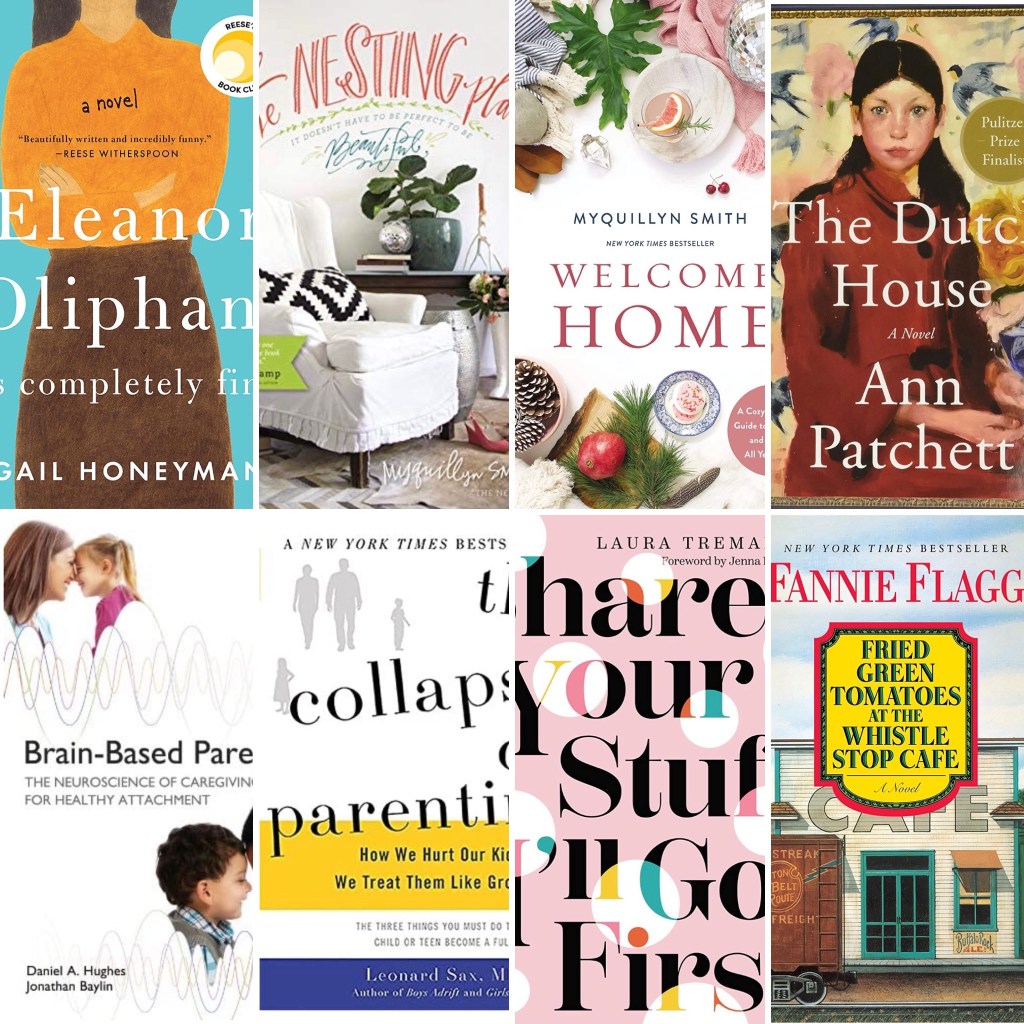
Eleanor Oliphant is Completely Fine – by Gail Honeyman — I actually thought this was another book when I started reading it. Then I thought I knew where the story was going. But it ended up being a completely different story than I thought it was going to be at the beginning. It’s about a woman who slowly unravels the trauma of her childhood, makes peace with her past, and grows into a mature friendship. 

The Nesting Placeby Myquillyn Smith — I’m in the middle of packing, purging, and taking the opportunity of a new nest to make some fresh changes. So I’m on the lookout for ideas for creating cozy, comfortable space in our new home. The author has lived in 14 homes in 18 years, so she knows about creating a home out of a house. Biggest takeaways: Limitations are a good thing. Things like a small budget, or a weird house layout, or a rental home that you can’t change are good things. Having too many options can be paralyzing. Every home has potential, if you just embrace it. 

Welcome Home – by Myquillyn Smith — More about making a home stylish and cozy, but more focused on minimalism and using each season to inspire style. 

The Dutch House – by Ann Patchett — A story about a brother and sister and the huge, elegant house they grew up in until their father died and their stepmother kicked them out. Together they navigate adulthood, relationships, and ultimately forgiving their estranged mother. I listened to this on Audible (read by Tom Hanks) and enjoyed it. There isn’t much of a plot, so it’s one of those books where you listen to people’s thoughts about life. I happen to love this kind of book, but I know it drives some people crazy.

The Collapse of Parenting – by Dr. Leonard Sax – My favorite read of the month. Key points: 1. Teach kids humility. They are not the center of the family (some of my people need this reminder!) 2. Conscientiousness and self control are the best predictors of adult success 3. Enforce good habits, don’t wait for your kids to want to do the right thing. “We are what we repeatedly do. Excellence then, is not an act, but a habit.” This book was a much needed course correction for our parenting. 

Brain-Based Parenting: The Neuroscience of Caregiving for Healthy Attachment – by Daniel A. Hughes — High recommended by adoption specialists. This one took me all month to read because of how dense it was, but it was well worth it. It helped me understand a lot about attachment dynamics and had a lot of helpful advice for dealing with challenging behaviors. 

Share Your Stuff, I’ll Go First – by Laura Tremaine — A guide to being a more open friend and inviting others’ stories into your life. I’m super introverted and usually think people don’t care so much about what’s going on in my life, but according to Laura, when you ‘share your stuff’ it invites others to share their stuff, and deeper friendships are the result. Thanks to the pandemic I haven’t had the chance to test out this theory yet, so we shall see. 

Fried Green Tomatoes at the Whistle Stop Cafe – by Fannie Flagg — Just like the movie but so much better.