Seasons.

I do a lot of thinking about seasons.

As I write this, it’s mid-February. My son is in California visiting his cousins. The temperatures there are in the upper 70s. Here in North Idaho, we’re experiencing our own heatwave with temps in the low 50s. It feels like the beginning of spring.

I’m curious how he’s liking the warm weather. After all, it’s what he’s been accustomed to, having lived his whole life, up until the past eight months, in California.

I am relishing the seasons here in North Idaho. The actual four seasons.

Growing up in New England, I took four seasons for granted. It was the background rhythm of my life. At the end of every sticky, humid summer I looked eagerly toward autumn and the changing trees. I impatiently watched for any sign that the maples and oaks were changing color (a spectacular time in Connecticut, usually mid-October).

Snow arrived sometimes by Thanksgiving, definitely by Christmas. I hoped for a white Christmas. By March, I watched for the temps to start climbing out of freezing. Spring in New England is short and haphazard, bringing both ice storms and 75-degree days. Then back to sticky, humid summer.

(I’m not a fan of summer. Probably something to do with cleaning houses with my mom during every summer break. Three houses a day. Most of the time the owners did not leave the air conditioning on. Usually, I was dripping by the end of each house. And we didn’t have AC in our third-floor apartment. I’ve had enough summer for a lifetime.)

I lived for fifteen years in California where there are two seasons: Cool and Wet (which lasts about three months, in a good year) and Hot and Dry. It generally doesn’t rain from March until the following December. When my body was expecting cooler temps in the “fall”, we were still having 90-degree days. There are a few trees that change from green to yellow, but not until late November. “Winter” is a few weeks of rain and 50-degree days. Nights could sometimes bring 30-degree lows with frost in the morning. My kids would scrape it off the deck to make “frost men”.

Christian circles like to use the phraseology of seasons. It’s the idea to have hope that your circumstances will change. But that starts to lose its meaning if you don’t actually experience seasons. You know conceptually what seasons are, but experiencing them on a daily basis makes you really know them. I’m not sure if everyone needs seasons, but I need them.

When it’s bitter cold and I can’t even walk to the mailbox across the street without gloves and a hat, I don’t have to despair. I remember the tulips and daffodils of April, and I know warmer days are coming. When it’s 80-degrees in July and I’m enjoying a carefree day at the pool with my kids, I can fully embrace the moment because I know soon enough, I’ll be searching the bins for mittens and boots. It’s hard to enjoy the moment in a place where you know the season really isn’t going to change. It’s still going to be hot in four more months, probably hotter.

I can enjoy the calm and peaceful season that I’m in because there is probably a challenging time just around the corner. Likewise, when I’m going through a rough spot in parenting one of my children, I know it will get better. A time of rest will come. The hard won’t last forever.

Now there is snow forecasted for later next week, so I guess this isn’t true spring after all. But I know that spring will eventually come.
2021 Book Roundup

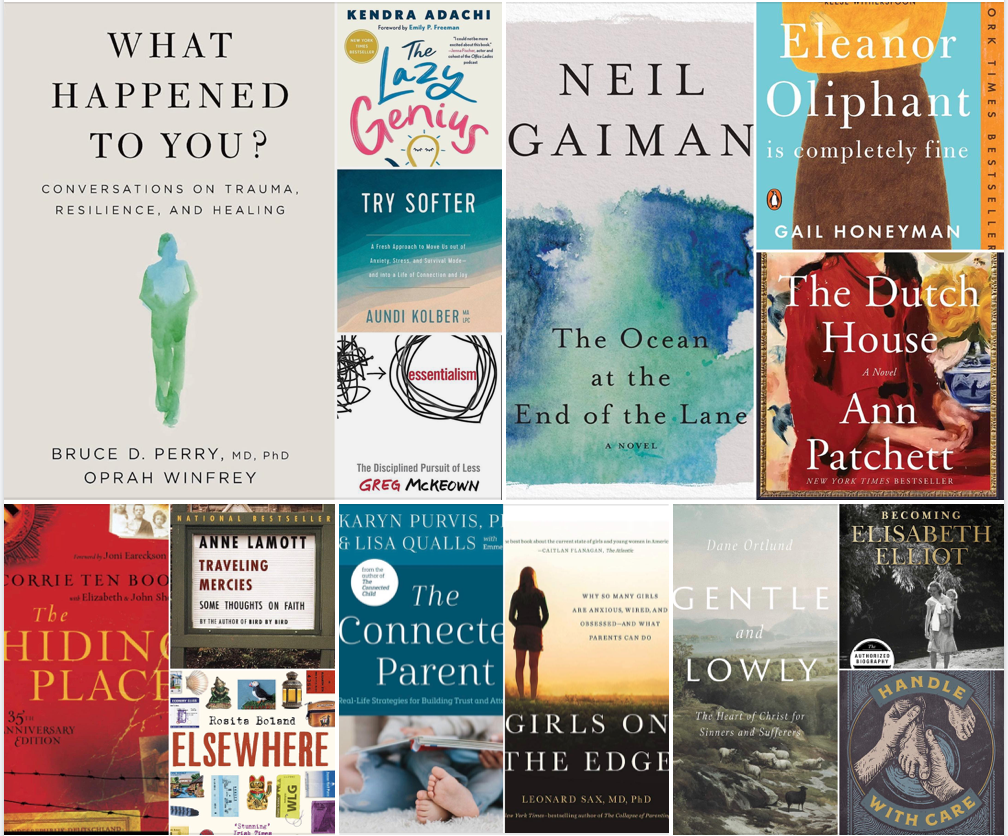
My favorite books of 2021! šŸ“š

General Nonfiction

• What Happened to You by Oprah Winfrey, Bruce D. Perry, et al.

• The Lazy Genius Way by Kendra Adachi

• Try Softer by Aundi Kolber

• Esssentialism by Greg McKeown

Fiction

• The Ocean At the End of the Lane by Neil Gaiman

• Eleanor Oliphant is Completely Fine by Gail Honeyman

• The Dutch House by Anne Patchett (specifically the audiobook read by Tom Hanks)

Memoir

• Elsewhere by Rosita Boland

• Traveling Mercies by Anne Lamott

• The Hiding Place by Corrie Ten Boom

Parenting

• The Connected Parent by Karyn Purvis and Lisa Qualls

• Girls on the Edge by Leonard Sax

Spiritual

• Gentle & Lowly by Dane Ortland

• Becoming Elisabeth Elliot by Ellen Vaughn

• Handle with Care by  Lore Ferguson Wilbert

I’ve had a few questions about how to find time to read. It is tricky with six kids.

• We still have quiet time on school breaks and weekends. That’s when I do a lot of reading. I need that time to recharge and so do my kids!

• I read for about 20 minutes before bed.

• Since we moved and had to purge a lot of things, I’ve been reading a lot of books on my kindle. Libby is a great app to borrow e-books free from your local library. I bring my kindle if I know I’m going somewhere that I’ll have to wait, so instead of mindlessly scrolling on my phone (which I definitely still do), I’ll bring up the kindle app and get a few minutes of reading.

• Audiobooks!! I’ve been using noise-cancelling headphones to listen to so many audiobooks. You can speed up the reading rate (the fastest I can go is 1.75). Your brain gets used to the faster reading so that normal speed sounds incredibly slow. These are my favorite budget noise-canceling headphones.

December Reads

Even though it was the month of December and I was busy with holiday preparations, I managed to read a ton! To be totally honest, it was probably because my kids were home from school for two solid weeks and I went on a lot of walks with my audiobooks.

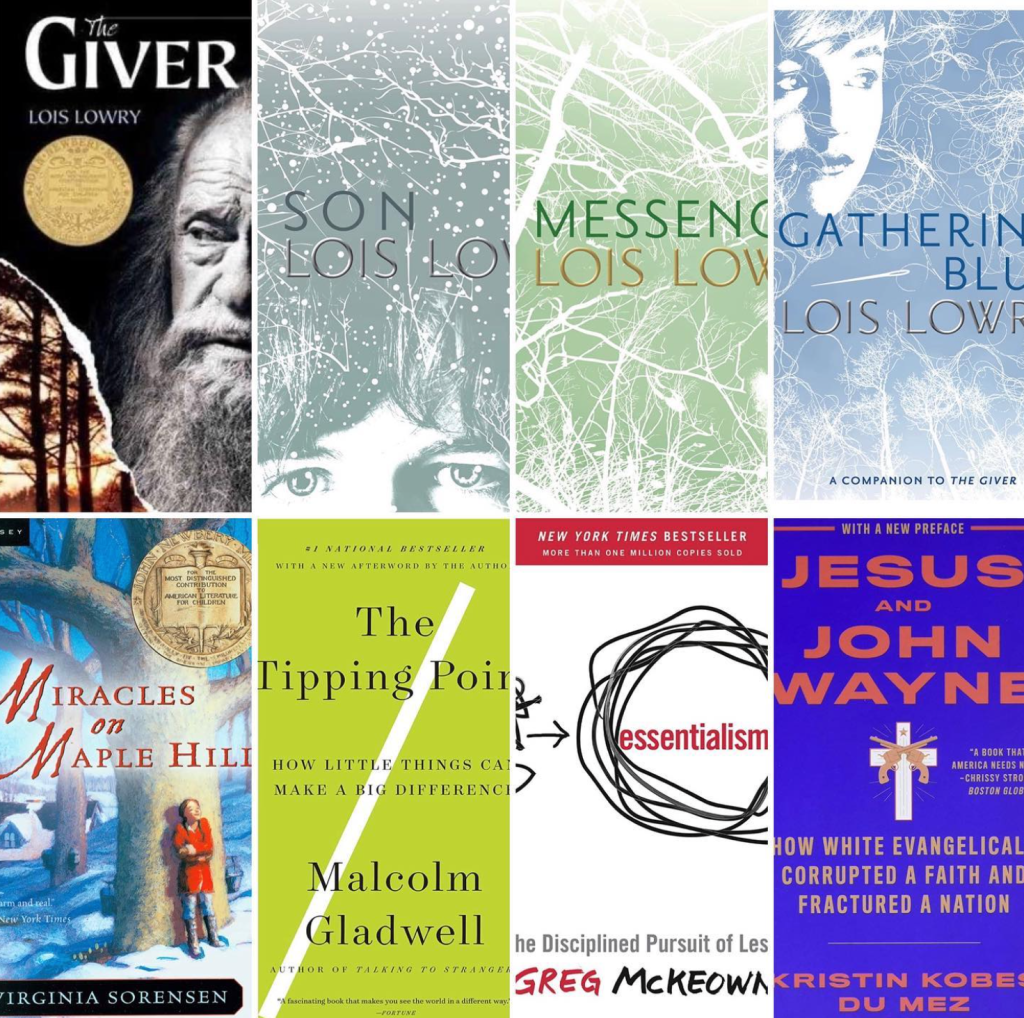
The Giver Quartet: The Giver, Gathering Blue,Messenger, and Son by Lois Lowry — I read The Giver in middle school and remembered it to be part thought-provoking, part very disturbing. Now my middle school son was assigned to read it. He got hooked on the whole series, and pulled me in.

One idea that keeps popping up in the books I’ve been reading in the past few months is the idea that productivity equals value. In our culture people are valued for the productiveness that they bring. If they are disabled, a child, or elderly, and they can’t contribute much, they generally don’t hold much value in the eyes of society. It’s the first thing that usually comes up in conversation: “What do you do?” If you don’t “do” something, the conversation stalls out and you end up talking about the weather, if you’re lucky.

The society in The Giver valued productivity to such an exaggerated degree that it can’t help but shine a reflection on us. How can we change this? How can we learn to value people simply because they are, not for what they can do? I believe these questions are at the heart of why our society is slow to embrace those groups who need a little help, whether because of mental illness, disability, or age.

The Tipping Point by Malcolm Gladwell — Another book that turned out to be very interesting and thought-provoking despite the topic being something I’d never even thought about before: how trends get started, catch on, and become viral. The book was written over 15 years ago, before the age of social media, and I think an update (or even a companion book) on the same topic would be valuable.

Jesus and John Wayne by Kristin Kobes Du Mez — This book was recommended by a friend. The author was provoked to this topic by the election of Donald Trump in 2016. She asks the questions, “How did a libertine who lacks even the most basic knowledge of the Christian faith win 81 percent of the white evangelical vote in 2016? And why have white evangelicals become a presidential reprobate’s staunchest supporters?” I’ve wondered these same things myself, and after reading her book, it makes a lot more sense. Plus, I gained a healthy wariness of Christian leaders that seem wholesome, but often are harboring ugly sin.

Essentialism by Greg McKeown — One of the best books I’ve read this year. It’s basically a how-to for Marie Kondo-ing your life (rather than your sock drawer). There were many take aways, like “To discern what is truly essential we need space to think, time to look and listen, permission to play, wisdom to sleep, and the discipline to apply highly selective criteria to the choices we make.” After reading this, I cut things out of my schedule and honestly haven’t missed them!

Miracles on Maple Hill by Virginia Sorensen — Another book that I read as a child and loved. Now that I’m an adult, I appreciate so much more about it that I missed as a child. It’s the story of a family who relocates from the city to the countryside of Vermont, as the father is trying to recover from PTSD after World War I (I totally missed that part as a kid!). The family finds peace and healing in the simplicity of being in the country, and Marly gets her dad back.

August Books

August was an interesting month of reading. Even though it was a crazy month, with getting five kids ready for a new school year and also moving my elderly mom out from Connecticut to Idaho. Even so, I had huge portions of time to read (like two 8-hour long flights!)

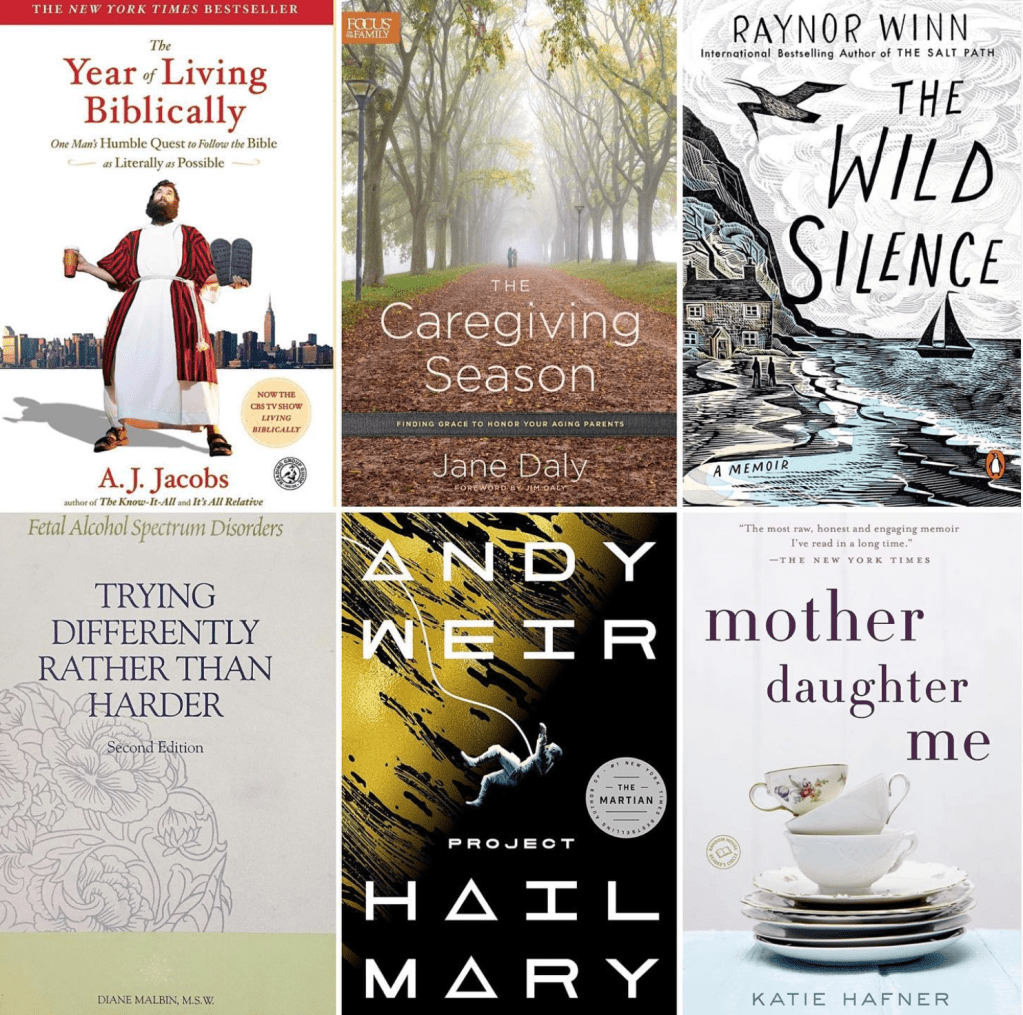
The Year of Living Biblically by A.J. Jacobs — This was a random thrift store find. It’s about a man who decides to live according to the Bible – as literally as possible – for a year. I had low expectations, figuring at best t was a lighthearted poke at the hard-to-understand parts of the Bible. But I found parts of it pretty fascinating. I learned about many Jewish rules in the Bible that people still follow today, like the admonition to not mix linen and wool (there is actually an expert in the field who travels to people’s homes and examines their garments to make sure there aren’t any offending fibers.) It was humorous, but also interesting.

The Caregiving Season by Jane Daly — A very encouraging book for anyone finding themselves suddenly thrown into the roll of caregiving for a parent. One of the best I’ve read so far.

The Wild Silence by Raynor Winn — The follow-up memoir to The Salt Path, which I loved. I found myself losing interest in this book. Like a hiker without a destination, it was more of a ramble without a clear objective.

Trying Differently Rather Than Harder by Diane Malbin — A book about the symptoms and strategies for managing behavior of people with Fetal Alcohol Syndrome Disorder. We learned just recently that it’s very likely that our 3 adopted children have FASD (and likely my mother as well). I read this book to try to fit in more pieces to puzzle of how to deal with behaviors that don’t respond to typical parenting. Highly recommended for any parent with a child on the FASD spectrum.

Project Hail Mary by Andy Weir — I almost never read sci-fi, but this one caught my attention because it came highly recommended by someone who also never reads sci-fi. It’s about a man who wakes up from a coma on a spaceship and slowly unravels memory to find his mission objective. There is a type of (space fungus? energy? matter?) that is sapping our sun’s energy, but not Tau Ceti’s, a star which is not being affected by the space fungus and is 12 light years away. He needs to figure it out and send the information back to earth before everyone on the planet dies in a planet-wide ice age. It reminded me of my high school days when I found theoretical physics discussions endlessly fascinating, dreaming of what possibilities lay ahead of us.

Mother Daughter Me by Katie Hafner — I love memoirs. I love learning about other people’s lives and the lessons they’ve taken away from their hard experiences. Since I’m going through my own journey with my mom, I found this memoir especially relevent. Katie’s book is about the year that she, her 16 year old daughter, and her elderly mother move into the same apartment. I was reassured by her description of having to confront her own emotions about her neglectful upbringing. There are so many up and down emotions involved with mothers and daughters, and this book was like chatting with a good friend going through a similar situation as myself.

July Books.

This month was a slow one for reading. I let a lot of distractions get in the way of reading, a mistake I won’t be making again in August!

The Hidden Life of Prayer by David McIntyre — (Audiobook listen for me) Very convicting and great encouragement to keep steadfast in prayer.

At Home in the World by Tsh Oxenreider — I’ve heard about this book for a few years and so was excited to finally read it, especially given how widely it was promoted. I thought it was something like a guide for how people can travel the world with their kids. Or at least would be relatable and inspiring. But in fact, it was clear that Oxenreider’s year of travel isn’t really attainable for ā€˜normal’ people, even though her writing seems aimed at inspiring others to do the same as she did. The effect was that the reader feels somewhat shamed at not being able to travel while also feeling a bit jealous of Oxenreider’s adventures. I wish the tone of the book was different! 

A Life Less Ordinary by Baby Halder — A random find at a thrift store. A memoir about an Indian woman married off to an abusive man at age 12, became a mother at 14, and eventually found the courage to make her own life. She wrote her memoir thanks to the help of a compassionate benefactor who encouraged her to learn to read and write and tell her story. It was a super interesting read, especially since I didn’t know much about this part of Indian culture. 

Of Mice and Men by John Steinbeck — I first read this book in high school and found it powerful and sad. But now as a parent of a special needs child, it hit much harder. It’s a very quick read and worth revisiting as an adult.

June Books.

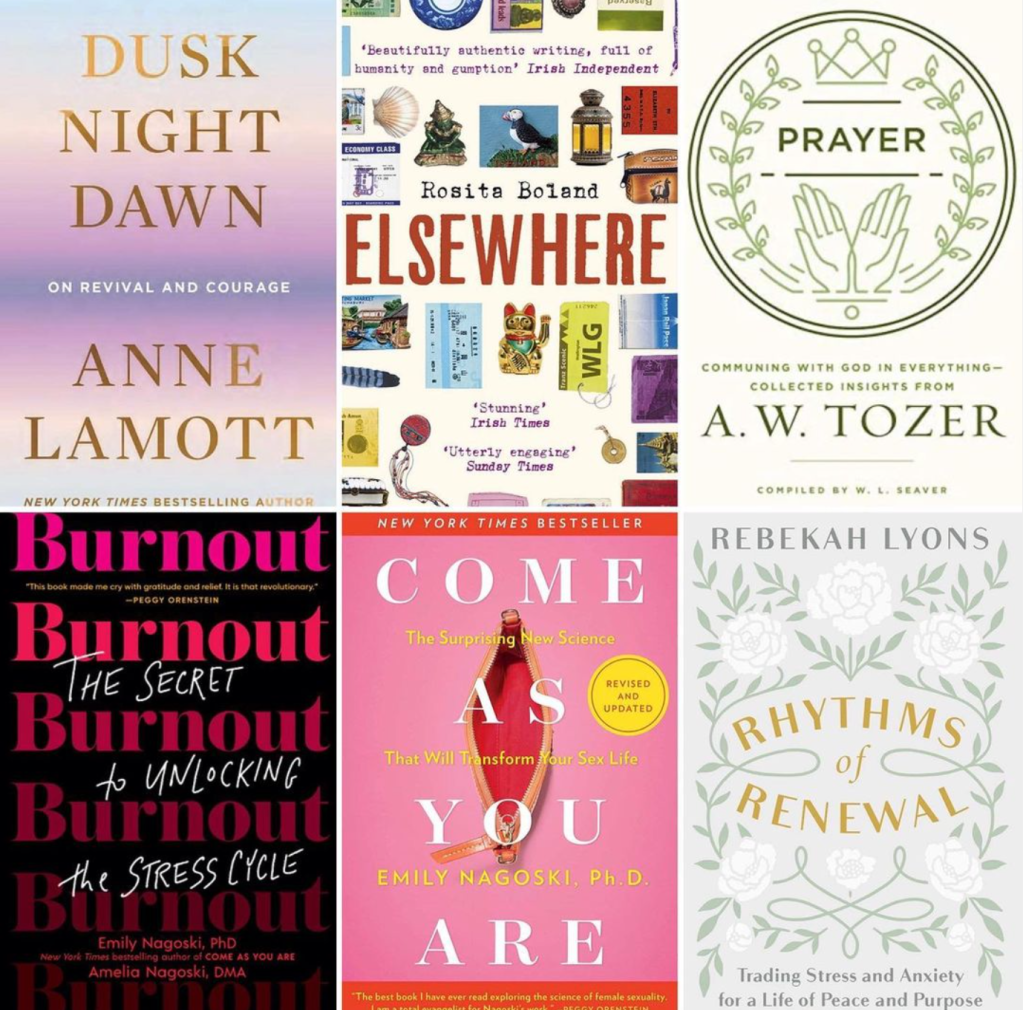
Dusk Night Dawn by Anne Lamott — I love Lamott’s writing so much. Like this quote, ā€œTaking kids outside to love God in nature is just about the most Jesusy thing we can do. Jesus was nearly always outside with His disciples or alone with the stars. To take kids to a beach, even one that is littered, is to bring them to an altar, a big one, surrounded by the blue-gray ocean billowing outward like a skirt, flecked with sunlight, like foil or diamonds.ā€

Elsewhere by Rosita Boland — Recently I’ve realized that one of my favorite genres is travel memoir, and this is one of the best I’ve read. It’s a shame it isn’t more popular (searching for the title on Amazon brings up about twenty hits, none of which are this book, weirdly). Boland absolutely loves words and travel… Her introduction is about Fernweh, a German word that means ā€œthe ache of not being in foreign parts, a desire to travel, an ache for distant placesā€. Each chapter is a different travel adventure paired with some amazing word like Eleutheromania (ā€œan intense desire for freedomā€). Besides her adventures, she also shares about her disappointment in losing her dream of motherhood, and learns to accept herself and be content with her life. 

Prayer  by A.W. Tozer — I always need encouragement in the area of prayer. This book is made of excerpts from Tozer’s other books or sermons on the topic of prayer, along with commentary and reflection. Each chapter is bite-sized enough to work well as a devotional. Tozer’s idea is that prayer should be a way of life, woven into the very fabric of every detail of our day. He writes ā€œSome churches now advertise courses on how to pray. How ridiculous! That is like giving a course on how to fall in love.ā€ It’s a book I will likely be rereading through the years.

Burnout by Emily Nagoski and Amelia Nagoski — This book is so good, and so dense that I could only read it in bite-sized chunks over a few months. I read it on Kindle and have so many highlights in all the chapters that I might as well have just highlighted the whole book. It’s like your own therapist in a book who walks you through things like how to overcome trauma and completing the stress cycle so it doesn’t get stored in your body. I didn’t love the overly-feminist attitude of the book, but it was good besides that.

Come As You Are by Emily Nagoski — Examines new scientific discoveries that show how women feel about their bodies directly influences sexual satisfaction. Biggest takeaway: You’re not broken. You’re normal. Now let’s try using what we know about women’s brains and bodies to make sex better. I found this book very helpful (though I’ll keep the specifics to myself!) I’d always felt like parts of my intimate life were broken, and someday I’d get around to figuring out how to fix them. But they’re not, and I’m not. I’m normal!

Rhythms of Renewal by Rebekah Lyons — I first read this book years ago as a much younger mom and just reread it this month with a foster/adoption group I’m in. It was only in rereading it that I realized that this book helped create many of the renewing habits I use today. Things like taking a walk to clear my head, having a calm morning routine to get my mind ready for the day, practicing Sabbath, clearing extra junk out of my day and my life to make more space for my passions. Some of the suggestions are obvious, but I think it’s helpful sometimes for someone else to point out the obvious and give an extra little kick in the right direction.

May Books.

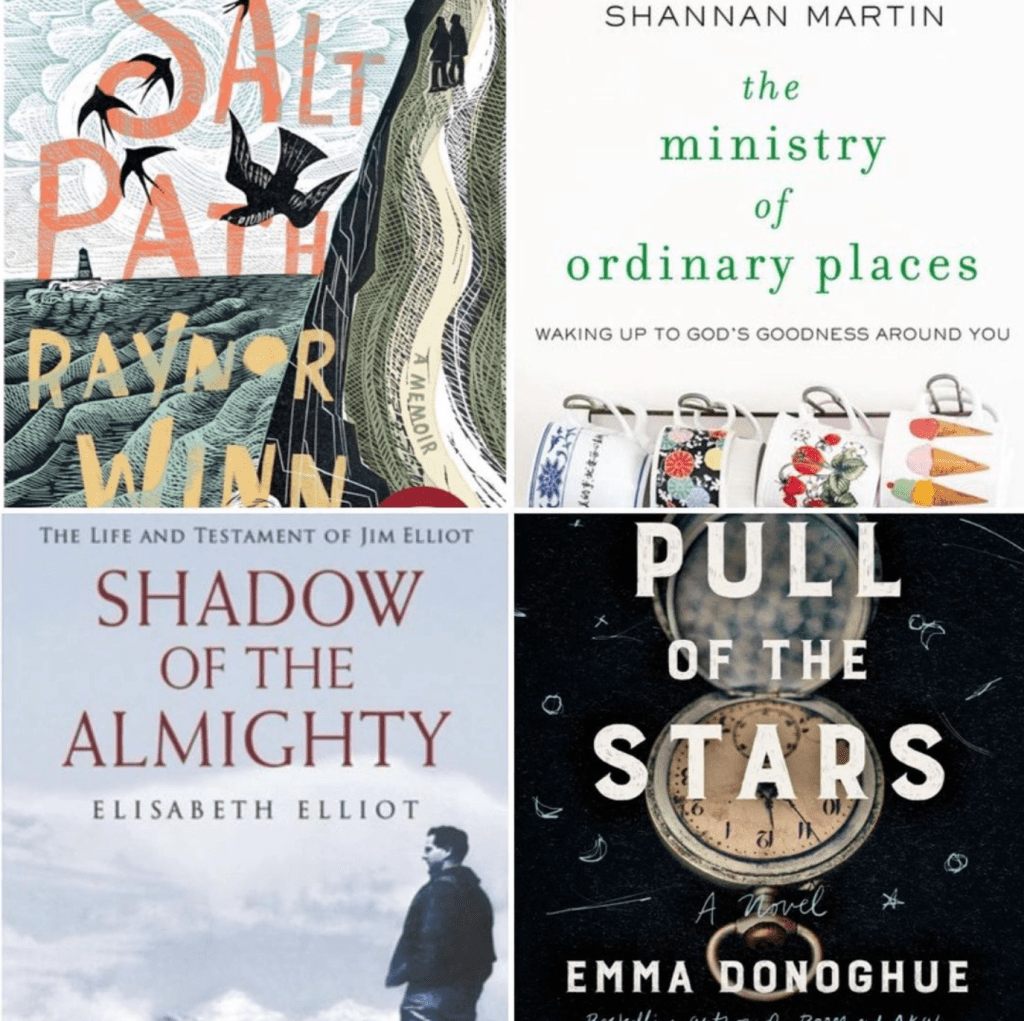
The Salt Path by Raynor Winn — A memoir about a husband and wife who lose their home and get a terminal diagnosis in the same week. They decide to drop everything and hike England’s South West Coast Path, some 640 miles. It was an interesting read, especially her descriptions of nature and camping. 

The Ministry of Ordinary Places by Shannan Martin — It was highly recommended by a few trusted sources, but I had a really hard time with this book. The author uses a lot of words without saying very much. As much as I love authors like Anne Lamott for their candor and down-to-earth writing, authors like Martin leave me confused and annoyed.

Pull of the Stars by Emma Donoghue — About a Dublin maternity ward nurse in 1918. This would have been a great timely historical fiction about nursing during the Spanish Flu if the author hadn’t pulled a random woke climax out of a hat at the last minute. The climax was so out of place that it seemed like the author set out to write a completely different ending, but was influenced at the last minute to make the book ā€œrelevant to the timesā€. 

Shadow of the Almighty by Elisabeth Elliot — A fascinating look into Jim Elliot’s life through his own journals and letters. It is so convicting and encouraging to read about such a young person having a strength of faith far beyond his years.

April Books.

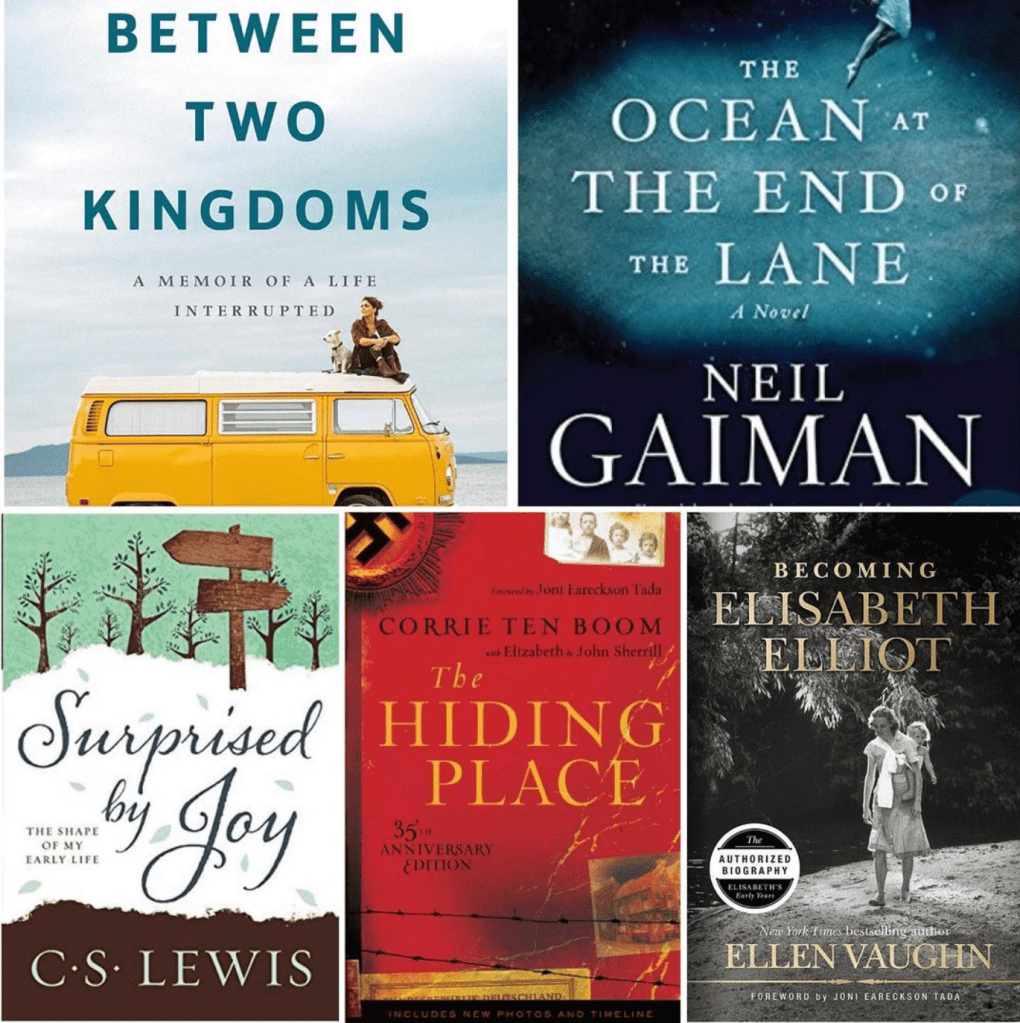
Between Two Kingdoms by Suleika Jaouad — a memoir about a young woman’s four-year-long struggle with cancer and then the challenge of figuring out life after cancer. It was informative to learn about the ongoing, daily struggle of a cancer patient. I have a friend who currently is receiving cancer treatment, and I think this book has helped me be a more empathic friend and know how to support her, even if it is long-distance support. Jaouad had the support of her family and their very generous insurance. I am interested to read a cancer memoir from someone with less emotional and financial support, which I think would be more in line with most people’s experience.Ā 

The Ocean at the End of the Lane by Neil Gaiman —This was one of those books that is so good it can bring in someone like me who isn’t normally a fan of the genre (fantasy fiction in this case). It drew me in with its universal theme of growing up…. of memory, growing up, and the desire to belong to a place. I’m likely going to reread this one someday just to uncover some more themes I probably missed. 

Surprised by Joy by C.S. Lewis — A must-read for any C.S. Lewis fan, it’s his autobiography of his early life. I’m not sure how I missed it all these years! 

The Hiding Place by Corrie Ten Boom and Becoming Elisabeth Elliot by Ellen Vaughn — I read these books at the same time, The Hiding Place through Audible and Becoming Elisabeth Elliot on Kindle. Sometimes reading similar books concurrently can reinforce themes in both of them. It really struck me how similar these two women were. They both had an unwavering love and obedience to Christ, even in the most crushing circumstances. What extraordinary examples of faithful women they both are! They are an encouragement for all Christian women. 

March Books.

March Books

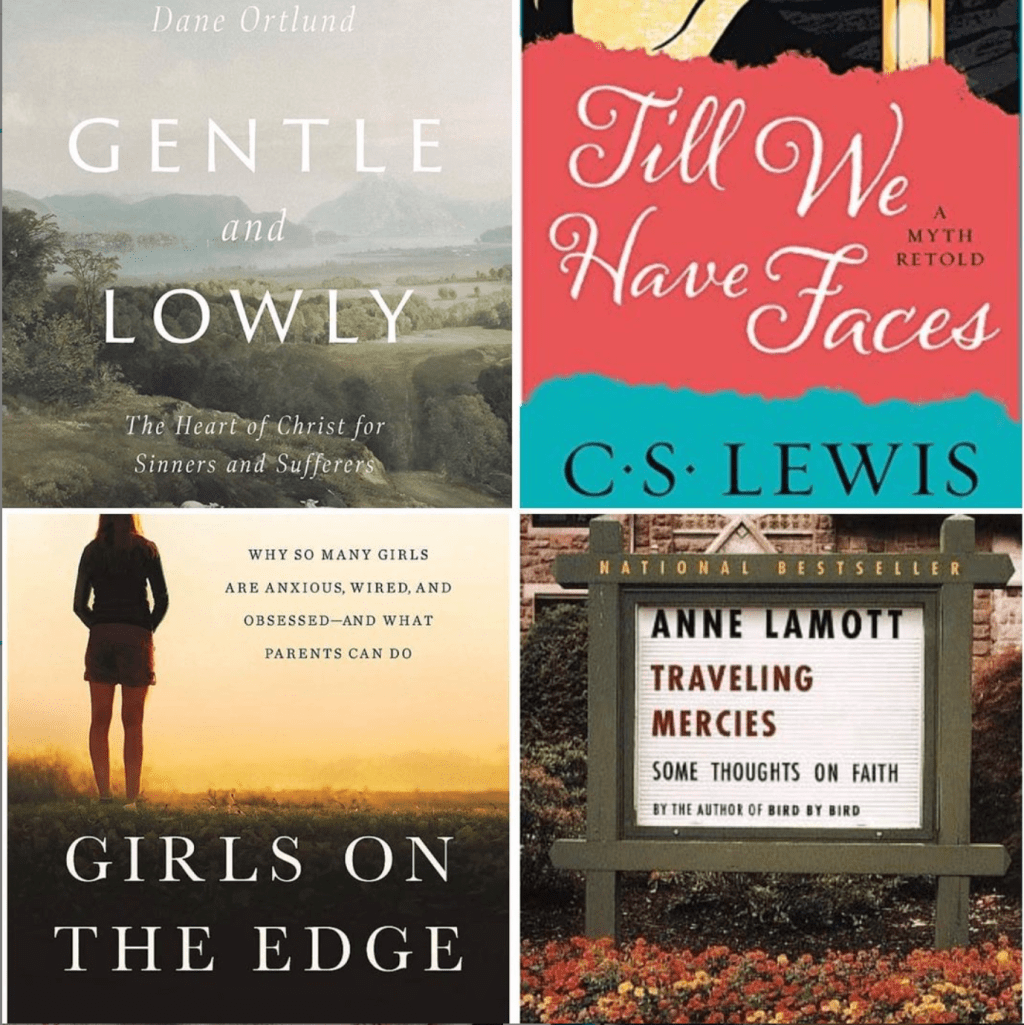
Gentle and Lowly by Dale Ortlund — Probably one of my favorite parenting books. It’s not about parenting at all, but it has helped me tremendously as a parent. It’s taught me how to be a more patient parent to my children by showing in detail throughout the Bible how much patienct, mercy, and grace God has with His children. It’s definitely a book I will be rereading annually.

Till We Have Faces by C.S. Lewis — Based on the myth of Cupid and Psyche, this is a book that was hard to push through, but it was worth it. C.S. Lewis shares his philosophy on envy, betrayal, and love. I love his books because they are so rich with ideas that often make me just stop mid-page and think about what I just read. One of my favorite quotes I’ve read in a long time came from this book, about longing for death not out of despair, but out of joy, a hope that somewhere a better place than this one exists and we will go there someday.

Traveling Mercies by Anne Lamott — I love Anne Lamott so much for her honest writing. She doesn’t pretend to have everything together, but simply invites her readers into her messy life, and writes in a way that makes you feel less weird about your own messy life. Traveling Mercies was all about her journey to faith in Christ and her thoughts on hypocrisy in faith.

Girls on the Edge by Leonard Sax — The subtitle of this book is Why So Many Girls Are Anxious, Wired, and Obsessed – and What Parents Can Do. This book was good at pointing out the areas that we as a culture our failing our daughters: sexualization, chemical exposure, too much technology/social media – and what we can do as parents to protect them from growing up too fast, both literally and figuratively (enforce modesty, change their diet, limit technology). I always love Sax’s parenting books because he encourages parents to apply their authority for the well-being of our kids. To hesitate our authority is to put our children at risk.

Baby Turns One.

Our youngest child turned one yesterday. She’s not really ours yet, though. She is our foster baby, currently waiting in a legal limbo, for courts to open up again so she can be legally freed from her birth parents, and then the county’s plan is for us to adopt her.

It is very strange to be in this place of being joyful over a child’s milestone, and yet realize that she’s not technically mine. We’re not yet guaranteed a future together. And so we take each day, each milestone as its own special gift. I try to hold off on thinking about the future too much.

Baby E came to our home when she was just a few days old. I picked her up at a hospital in our nearby city, a hospital well-known for its substance-abuse births. There was some discharge paperwork holdup, so we ended up having a few hours to ourselves to get to know each other.

Looking back, I am thankful for that time of waiting together. I snuggled her newborn little body. I fed her a bottle. Changed her tiny diaper. Snuggled some more. She was so peaceful, content to just look towards the window or into my face. In many ways she is the same baby a year later… happy and content. She doesn’t realize the legal events going on around her.

Caring for children in foster care and adoption is a reminder that even my birth and adopted children aren’t really mine. They are with me only for today, and I’m not guaranteed a future with any of them. They could be stricken with cancer next week, or get hit by a car (both these are real possibilities, that have happened moms in my circle of aquaintaces).

My God-given task is to love them today, and teach them about their Maker. Lord, help me to really be with them all today, to really see them and hear them, and point them towards their God who loves them so much more than I ever can.