I Was a Great Parent–Then I Adopted

When I only had two bio kids, I prided myself on my excellent parenting. My kids were obedient. They didn’t have tantrums in public. Their clothes were clean. Their hair was neat. I made organic, healthy, colorful meals. I limited their simple carbs and sugar. I made sure their screen time was almost nonexistent. I was such a good parent. Then we adopted two kids, and life got a lot more interesting. I remember the first time I felt the shame of not having it all together.

There was the time we were all in the school district office waiting for a speech evaluation for my 3-year-old. She had mismatched socks, a juice-stained shirt, and (apparently) a sticky face. The school secretary came over and said to me, “Oh honey, here’s a wipe for your baby’s face.” Turning to my daughter, she said, “Did you just have breakfast, sweetie?” It was 11:00 am. I simply forgot to wipe my kid’s face. Milestone: stranger commenting on my kid’s appearance.

Then there was the time we went to an end-of-the-year picnic for my older kids’ school and I left my toddler’s shoes at home an hour away. Milestone: buying knock-off crocs at the local pharmacy. 

And the time we were on our way out the door (late, of course) for a school function, my toddler started screaming in that high-pitched screech that could only mean pain. After searching her all over, I realized she had eaten some “red berries” from a weed. After calling poison control, I learned it was a poisonous plant. We gave her ice to chew on, and she was good as new in ten minutes. No actual harm was done, thank goodness. Double milestones reached: first call to poison control and being epically late to a school event.

The kicker? This was all in the same week. My younger self would have been horrified by any one of these situations, and the self-loathing would have been strong. I held myself to an incredibly high standard that no parent should try to attain. My kids’ clothes and faces were always clean. I never forgot their shoes. 

It would take two more kids and several years later to finally learn the truth: that clean faces and limited screen time are not what makes me a good parent.

Parenting adopted kids is hard. They come with trauma and complicated behaviors. Sometimes they require extra patience from us. They need a lot of our energy. They need us to co-regulate with them. We can’t do that if we’re running on empty from trying to do too many things that don’t really matter.

We Need Less Guilt & Shame

Brené Brown talks about guilt versus shame in her 2012 Ted Talk. Guilt, she says, is focused on behavior. It says, “I did something bad.” It is one of the most prevalent emotions parents feel. But do we deserve to feel it? The next time you feel guilty about something ask yourself, “Did I actually do something bad to my kid by saying no to that fourth marshmallow?” (Or the expensive pair of shoes, or the sleepover you know they can’t handle?) No, it’s our job as parents to make good decisions to keep our kids safe and healthy. We need to quit feeling guilty about things that aren’t bad behavior. 

And then there’s shame. Brené Brown says shame is “the intensely painful feeling or experience of believing that we are flawed and therefore unworthy of love and belonging—something we’ve experienced, done, or failed to do makes us unworthy of connection.” When we constantly feel like that as parents, it’s unlikely we’re connecting with our kids the way we’re meant to.

So, how can we be the best version of ourselves for our kids? We’ve heard that we should practice self-care, but what does that look like when you’re in the middle of messy parenting? Not many of us have time for a bubble bath or a night out with friends. Here are a few things we need a lot more of that don’t take much time at all:

https://2be33194629ab92c59bd3fed1b00a920.safeframe.googlesyndication.com/safeframe/1-0-38/html/container.html

Slow Down and Smell the Roses – Literally 

When is the last time you just sat outside with no agenda? Just felt the sun’s warmth on your arms, the breeze brushing across your face, the grass under your feet? Being outside is good for our kids, but it’s also good for us. It makes us feel better when we stop for a few minutes and just be. “Being in nature, or even viewing scenes of nature, reduces anger, fear, and stress and increases pleasant feelings.” When we feel calm and regulated, we can have more patience with our kids and more like the parent we want to be. Read more about the healing power of being outside in The Nature Fix by Florence Williams.

Compassion For Our Kids

Recently I read a quote in the book Love Centered Parenting that stopped me in my tracks. The author, Crystal Paine, told about a conversation where a therapist said to her, “I think you are trying so hard to fix and correct your child. What would it look like if you just walk with them and love them instead?” Ouch. That one hit home for me.

I have a kid that I am always trying to fix. Food is the main issue that I’m trying to fix with her. She craves carbs. I tried everything to aid with her food issues, to no avail. Nothing is so comforting to her as a quesadilla, fluffy tortilla on the outside, and gooey warm cheese on the inside. To her, the food she loves equals safety. And when she feels safe, she can relax and feel the love we’re trying to show her. When I stopped trying to fix her food issues, I had more compassion for her. I was able to come alongside her and work with her to find foods that we can both agree on. She’s happier, I’m calmer, and there’s a lot less nagging. 

Grace for Ourselves

One of my favorite adoption parenting resources is The Adoption Connection by Melissa Corkum and Lisa Qualls. They always sign their newsletters with the line “You’re a good parent doing good work.” This maxim always encourages me and it’s an important one for us to hold on to on those hard days.

We cannot possibly be everything to our kids. We can’t be their therapist. We can’t be their teacher or psychologist. We can try our best, but in the end, what matters most is our relationship with them. When our kids are adults, they won’t remember that their clothes were clean for strangers. Or if they do, it will be a negative feeling of imposed perfectionism. But what will have a huge impact is memories of compassion and love. You don’t have to be anything close to perfect for your kids, but you do have to make them feel truly loved. 

I feel like I am a much better parent today than I was all those years ago. Yes, life is messier now (and a lot louder!) But my kids and their different needs have helped me see what is most important in life: loving them and letting go of everything else. 

Adoption and Family Culture

I have four daughters: three are Latina, adopted through foster care (one is actually waiting on adoption), and one is biological. She is a blondie like I was as a kid. When people see us in public together, there are sometimes (rude) questions, like “Do they all have the same father?” (No. I’m not sure who three of their dads are.) “Are they all yours?” (Yep!) 

If it’s a Latino commenter, they will usually notice the youngest Latina kid and exclaim how cute she is. This is normal. If it’s a white person, they will comment on my biological daughter’s ultra-blonde hair. This I find oblivious and annoying. It has happened a lot, so it’s definitely not an isolated issue. The fact that it’s a pattern makes me think there are a lot of oblivious people. 

I used to be just as oblivious. My understanding of culture and origin family has changed so much in the 11 years since we first got involved in foster care. Back then, we were so naive. We thought love was enough to solve any problem, and our child’s culture didn’t matter. 

Our very first foster placement was a newborn baby girl of Native American heritage. I’ll call her Benna. We were told from the beginning that she would not be available to us for adoption. The Indian Child Welfare Act (ICWA) designated that she be adopted only by a Native American family. The purpose of ICWA being passed is 

“…to protect the best interest of Indian Children and to promote the stability and security of Indian tribes and families by the establishment of minimum Federal standards for the removal of Indian children and placement of such children in homes which will reflect the unique values of Indian culture.” 

The protocol for social services was to inform her tribe of her birth and they would start searching for an adoptive family from their tribe. 

She was an adorable, easy baby and we all fell in love with her. As the weeks stretched into months, we heard nothing from her tribe. We began to hope that maybe she would stay with us. 

Then one day out of the blue when she was nine months old, we received a call from her social worker that an adoptive family was found in Maryland and they would be flying out to California to pick her up in two days. We felt like we’d been punched in the gut. We packed up her things, printed all her baby photos, and two days later said goodbye forever. We put on our brave faces to our friends and feigned support for ICWA, but privately we were so hurt. Wasn’t it better that she stay with us, the only family she’s known for her whole nine months of life?

There is a prevalent idea in many evangelical circles, that adoption is a picture of the gospel. We were on board with the concept of adoption as a picture of the gospel: once an adopted child enters your family, their past is wiped clean and they are a new creature. Their old life is gone and they are now part of the Knapp family culture, regardless of their origin family’s culture. 

Russell Moore is a popular Christian author and adoptive father of two boys from Russia. When he wrote that he doesn’t plan to celebrate their Russian heritage, only their new Mississippi heritage, he said, “That’s adoption. We’re part of a new family, a new tribe, with a new story, a new identity.” 

I recently listened to a podcast on the topic of adoption as a gospel metaphor. Professor Erin Heim, adoptee and author of Adoption in Galatians and Romans: Contemporary Metaphor Theories and the Pauline Huiothesia Metaphorswhich sounds super intellectual but is actually easy to follow and very interesting. Heim explained that our modern understanding of adoption is nothing like the contemporary cultural understanding. In Biblical times, adoption was more about inheritance management rather than bringing a child into a family. It was about carrying on the family business. 

Without realizing it, I believed that my kids’ culture didn’t matter. But even when I felt that it did matter, I wasn’t quite sure how to include their culture in our family. That is, until my Latina daughter’s grandmother invited me to honor their Puerto Rican culture. For Christmas one year, she sent me a Puerto Rican cookbook, pigeon peas, and sazón seasoning. She sent us books about wildlife in Puerto Rico. She spoke Spanish to her granddaughter during video visits. When she came to visit us, she taught me how to make sofrito (Puerto Rican style, of course) and Arroz con Gandules (pigeon peas with rice). It took someone almost literally holding my hand to show me how to embrace Latino culture. 

In turn, we have looked at our daughters of Mexican heritage and asked ourselves how can we celebrate their culture? We have Latino food night and have learned how to make empanadas in different traditional ways. (I had no idea that empanadas are a universal Latino food, and each region customizes the filling based on their own cuisine. Now it seems so obvious and I’m realizing that I have so much to learn about Latino food culture!) I try a new Latino dish a few times a month (last week it was tostones, or fried plantain chips). 

We watch TV shows and movies that feature Latino characters like Alma’s Way on PBS, a show about a Puerto Rican family living in the Bronx, and of course, Encanto. I’m learning Spanish slowly and painfully. We plan to take a family trip to Puerto Rico in the next few years when our daughter is about 5 and old enough to remember it. I hope to be able to know enough Spanish to not embarrass myself there. 

The blessing of all of these new traditions is that they are becoming part of Knapp Family culture. We are all better people because of it.

Ten years later, I have come to understand more about why ICWA was enacted. I’ve learned more about my country’s awful history with Native Americans, and now it’s a no-brainer that keeping Native children together with their tribe and culture is the best thing for Native children. I am thankful for what that experience taught me, even if it hurt at the time. 

Real life isn’t like the end of Annie, where everyone is happy and embraces each other. Real-life is messy and full of trauma. No amount of adoptive family love can change the deep pain a child feels inside when they lose their birth family. This is true even if the loss happened at birth and they don’t consciously remember anything. But if they are connected to their culture and they know their family embraces and celebrates that culture, it’s one more tie that can keep them grounded during the turbulent waves of adolescence. 

I’m sure I will mess things up. I’m constantly learning. The first step is not being afraid to look foolish in the process of trying to do better for our kids. What if we as Christians, and indeed all people, admitted there are things we don’t know? Even admitted that there are things we’ve gotten wrong in the past? What if we listened to the voices that have endured pain? Let’s start from a place of humility and see where it takes us.

I Don’t Have to Take Care of My Abusive Mother.

I left home at the age of 20, during my sophomore year of college. My mother didn’t even realize I was moving out because I did it secretly: during a weekend home, I packed only what I wanted to keep and wouldn’t be missed, and left everything else behind. I left a letter in our mailbox explaining why I was moving out, where I would be, and how my mother could reach me. To say it was a big step is an understatement. For me, it was like taking a jump and landing on the moon. 

My mom was abusive and controlling my whole life with her. She was a single mom and I was an only child (later, I would learn that I had an older sister 15 years my senior, who also left home at only 15 years old). 

Growing up, my mom was a pinball machine of mental illnesses that resulted in her being constantly angry, depressed, anxious, fearful, narcissistic, and paranoid—the effects of which were all aimed at me, the only other person around. She was emotionally explosive. There was the time I was ordered to sleep outside because of something I’d done, despite it being winter. I was eventually allowed to sleep by the house’s front door only after much crying and begging. I was often spanked (beaten) so hard that she broke objects over my body (one that sticks out in my memory is a thick wooden kitchen spoon). And there was a time when I was about 9 years old and my mother imagined that I was stealing wine from a bottle she’d hidden, so she forced me to drink a 16 oz glass of wine to teach me a lesson. I’ll leave to the imagination what happens when a 9-year-old drinks over three servings of wine. There are many more episodes like these.

So, as soon as I was able, I left my home. A few months later, I apologized for how I handled the situation and attempted to reconcile with my mother, only to be given a moving truck full of my belongings and a warning never to speak to her again. 

Fast forward 18 years. I am married and have six children of my own, and live on the other side of the country. Through a series of phone calls from strangers, I learn that my mother is in poor health and needs help. I visit her for the first time in 18 years and realize that she cannot live independently anymore. She is alone and needs to be closer to me because I can’t keep flying across the country to help her.

It was both a hard and an easy decision to move her to our town. I am a Christian, so there are some principles guide my life and inform my decisions. One is honoring my parents. Another is caring for widows, and another is showing love to my enemies. I know it’s the right thing to do. But it’s still hard because I know it will be painful. So I make the arrangements for her to move closer to us. We find an apartment a mile away and fill it with furniture I find at thrift stores. I fly across the country one last time to pack her up and bring her out. I steel my mind for this new chapter and tell myself just to treat her like a normal person. Maybe a distant aunt. 

At first, it’s easy to have compassion for her. She is, after all, an old lady. She needs help with daily tasks. She doesn’t drive, so I do her grocery shopping. She doesn’t understand what goes on at her doctor visits, so I accompany her and interpret what she needs to know. My husband handles her finances and helps her pay her bills. 

And then there is the emotional side: she doesn’t address the previous 18 years. It’s as if they never happened and life has been normal. She acts like a normal mother. She comes over to our house for Christmas. She wants to take me out for lunch when it’s my birthday. My brain is confused because I don’t know how to fit this new person into my adult life, especially when I can’t stand to be around her. Even seeing her handwriting on a grocery list fills me with anxiety.

Things go relatively smoothly for a while. It’s not easy managing another adult’s whole life, and it’s not easy incorporating a new grandparent into our family life, but we eventually seem to adjust to our new normal.

Until we don’t. 

My mom ends up with a three-month-long health issue resulting in surgery and a weeks-long recovery. This means many more doctor appointments and much more hands-on care. I already know that I can’t bear being around her for more than a few hours at a time, so for weeks my husband and I trade shifts to care for her. All while still juggling our own family. There are mystery skin rashes to diagnose, diabetic emergencies, emotional meltdowns, taking kids to jobs, school meetings, and the normal chaos that comes with having six kids. 

Being around my mom so often brings up a lot of crud from my childhood. I am still angry with her for how she treated me as a child. And I am resentful that she is taking time away from my own children and causing me to be more like the mother she was and less like the mother I want to be. But I can’t show my anger. As a child, and now as an adult, I have to keep a lid on my emotions because I know if I show any anything besides cheerful acquiescence, there will be a huge emotional scene from her, and I can’t deal with that. As a child and even now as an adult, I use immense energy to stuff my emotions down and put a smile on my face.

After I left my mom’s house one day, utterly drained from interacting with her, and then having to go home and be a mom to my own kids, I knew something had to change. I talked to my therapist about what has been going on and she helps me realize something that now seems very obvious:

I don’t have to take care of my abuser. NO ONE expects me to take care of my abuser. 

For some reason, hearing those words from someone else released me from the guilt I had been carrying: about hating being around my mother, being angry with her, not wanting to take care of her, and not being able to reconcile this new version of my mother with the abusive one I had known as a child. I let go of the guilt of wanting to help her, but also not wanting to be physically around her. 

I still feel strongly that my mom needs to be taken care of. I can’t turn my back on her and let her survive alone. But that doesn’t mean that I have to be the one going to her house every day. I don’t owe her any more of my presence than is healthy for me to offer. I have my own family now and my own children to mother.

My husband is the main one that has difficult conversations with my mom because I cannot do it. So he talks with her and lets her know that we will be hiring a senior helper and that she will be paying for it. He framed it lovingly saying “It seems like you need more help than we are able to give, and we don’t want you to go without the help you need.”

I am still in the middle of this, and I think it’s going to be an ongoing process. I’m still sorting out my feelings and trying to find a good balance of showing my mother love from afar and keeping my boundaries so that I can be the mom to my children that I never had. 

More Resources
I realize that I am fortunate to have a supportive spouse that can help shoulder the burden of caring for an aging parent, and not everyone is in this position. Many state agencies offer help to the elderly. Eldercare Locator was helpful early in our search and locates resources in your area. Local churches can also help with meals and finding people qualified to help the elderly. If your parent has state Medicaid, there are many resources available, including transportation, in-home helpers, and more. Your area likely has local agencies that provide services for the elderly in the community.

I also have a therapist that I can afford because of my husband’s health benefits. Not everyone has this ability. BetterHelp is an excellent resource for people needing therapy, and their pay scale is very reasonable. I have used this service in the past and was happy with the care I received.

I posted a request on Nextdoor for qualified senior helpers and have received many responses that I’m still in the process of vetting. The great thing about Nextdoor is that it locates people right in a selected neighborhood or location and uses the power of word-of-mouth. Someone usually knows someone nearby that is interested in a caregiving job.

If you are in a similar position as I am, talk to someone. Find support. May you find the healing that you deserve.

A Review of Turning Red

My four daughters and I watched Disney’s new movie Turning Red for the second time tonight. It’s about a quirky thirteen-year-old girl who, seemingly overnight, develops all kinds of feelings and hormone rushes and then **poof** turns into a giant red panda. Hilarity and chaos unsues. I won’t give any spoilers, but the big idea is that she just has to last a month until she can undergo a ritual that will lock away the panda for good.

The movie explores mother-daughter relationships, friend relationships and the longing to fit in that most of us went through at that age. And of course, spends some time tackling the subject of puberty in a very open and hilarious way. Most other reviews have covered the puberty angle of the movie.

But I was more struck by how the movie depicted the relationship between Mei Lee and her mother. Mei Lee’s mom clearly loves and wants the best for her daughter, but is quick with criticism and judgment of her daughter’s world. As a result, Mei Lee hides her true self from her mom. 

There is a scene where Mei Lee’s mom finds a notebook full of (innocent yet cringy) drawings of boys and immediately has a huge, embarrassing outburst. The scene physically hurt to watch. I had a very similar experience with my own mother that was humiliating and soul-crushing. It was the first time that I realized my true self was not safe with my mother and I needed to hide away any messy feelings.

Another scene that hit home for me was at a party where Mei Lee’s mother accuses her friends of influencing her to be the silly teen she is. Mei Lee is forced to make a choice between her friends and her mother. She chooses her mother. I also was in that situation several times and it is a frustrating, maddening position to be in, when you are torn between the people that know you the best and accept you for who you are versus the mother who, though she provides for you and keeps you physically safe, she doesn’t fully accept you. You know there will always be things you have to keep hidden. Her love is conditional on her approval. 

Finally, (and I’m going to try to explain this without any spoilers)… there is a scene near the end where Mei Lee is wandering in a dreamlike bamboo forest, sort of an ‘in-between’ place. She finds her own mother (named Ming) as a teenager crouched on the ground and crying. Ming cries out “I’m so sick of being perfect! I’m never going to be good enough for her…or anyone.” We realize that the same disapproval she applies to Mei Lee was applied to her as a young woman. Mei Lee tells her, “I know it feels that way all the time, but it isn’t true.”

She leads her mother sniveling and downcast through the forest to an open area with all the aunts and her grandma. Ming and her mother embrace, and she finally receives the unconditional approval she so desperately needs. “You don’t have to apologize. I’m your mother.” Grandma says.

Cue tears. Regret flowed in for the relationship with my mother I always desperately wanted but never had. I know I’m not alone in this because I’ve spoken to adult daughters who have similar regrets for their relationship with their moms.

Yet there is hope. My four daughters are still young enough that I have time to change the narrative. Just like Mei Lee, I can change my daughters’ future. They don’t have to grow up as we did, hiding their true nature out of fear of disapproval. We can share our struggles with them and show them that we are human. We can realize that our children are not a measure of ourselves. They should have the freedom to be their own person and not have to worry about our self-image. 

Between the Far from the Tree short, Encanto, and now Turning Red, I think a generation of filmmakers are processing their childhoods and now are producing films that show young people deciding to change the parenting narrative. As I grow older and walk further into the work of raising daughters, I’m stepping into the freedom that comes with untangling unhealthy generational patterns. I ask myself, “What kind of mom did I need as a girl?” and let than inform me how I parent my daughters.

Top Three Resources for Adoptive Parents

So you’ve decided to jump into the world of adoption. 

Maybe you’re still wading through your paperwork pregnancy. Perhaps you’re waiting on a match. Or maybe you’ve already brought your new child home. 

You’re probably dreaming of what life will be like with your new addition. If you’re anything like me, you may have one or two bio kids and think you’ve got this parenting thing down. Your kids may be (generally) well behaved, sleeping through the night, and hitting their milestones on time. How hard can it be?

You need to know that parenting children from adoption is different from parenting biological children. Adoption always involves trauma. Please read that again and let it sink in. Adoption always involves trauma.

Why is there trauma? Because even in the very best case, where a healthy birth mother has a stress-free pregnancy and makes an adoption plan that includes her child being transferred to their adoptive parents at birth, there is separation. The baby knows his mother’s unique voice and heartbeat. It is a jarring transition when he is removed from that familiar environment. 

If you’re adopting from foster care, there is likely some combination of abuse, neglect, exposure to domestic violence, and in-uterine drug and alcohol exposure in the child’s history. Getting even a young infant doesn’t mean they are trauma-free. One of our daughters came to us at six months old and already had been exposed prenatally to drugs and alcohol, and had experienced periods of neglect. This is all trauma. 

If you are adopting internationally, the child has likely experienced periods of neglect, parental loss, and possibly stressful medical care. These experiences cause permanent changes in the brain, leading to verbal/auditory processing issues, sensory problems, executive function challenges, and even learning disabilities later in childhood.

This means that we need to parent differently than conventional parenting books suggest. For example, we may use time-outs as a tool for changing behavior with a typical child. A toddler hits a sibling, and so we put him in the time-out chair for a few minutes. For a child with trauma in their background, this may trigger feelings of abandonment, compound the problem, and cause even more behavior challenges. We need to parent with brain science in mind. Here are the best resources I have found for this job.

Resources

1. The Connected Child by Karyn Purvis, Ph.D. and David Cross Ph.D. – 

This book is invaluable to any adoptive parent, even if you’ve had your child home for years. The basis is Trust-Based Relational Intervention (TBRI), a way of relating to children based on meeting their physical and attachment needs and learning ways to calm fear-based behaviors.

The authors cover the brain science behind our children’s behaviors and offer practical advice for handling it. As the title suggests, it places a significant emphasis on connection, believing that a child wants to do well and will do their best when they feel safe and securely attached to their parent. 

It covers concepts like felt safety, the IDEAL response, and re-dos. It has suggestions for supporting the child’s sensory needs to (support) cooperative behavior. It emphasizes mutual respect: speaking to your child with respect and teaching them how to communicate with others with respect. 

2.The Connected Parent by Karyn Purvis, Ph.D. and Lisa Qualls

This book is similar to The Connected Child in that it uses the same TBRI principles, but the emphasis is on walking the techniques out on a day-to-day basis. It is co-authored by Lisa Qualls, a foster parent and mom to twelve children by birth and adoption. She has lived these principles out with her children for the past fifteen years, so she understands how hard it can be. One of the best aspects of this book is the idea of using scripts with our kids, which are short phrases aimed at redirecting children to better behavior. They really work every time we use them. 

What struck me most about this resource is that the authors don’t just give advice for the kids but also offer grace for the parent. They remind us that this journey of parenting adopted children is a marathon, not a sprint. If we are to parent well, we need to keep our needs in mind and even seek professional help if we need it. 

3. What Happened to You? by Bruce D. Perry, M.D., Ph.D., and Oprah Winfrey

The longer I parent, the more I realize how my upbringing affects my parenting instincts and decisions. Sometimes we don’t realize how our adverse experiences unconsciously inform how we parent. This book dives deep into the brain science behind behavior and offers wisdom for dealing with our own and our children’s issues.

I listened to the audiobook version and enjoyed the back and forth conversation between Perry and Winfrey. But I also got the hardcover version to take notes and mark it up. It is so full of valuable information!

Seasons.

I do a lot of thinking about seasons.

As I write this, it’s mid-February. My son is in California visiting his cousins. The temperatures there are in the upper 70s. Here in North Idaho, we’re experiencing our own heatwave with temps in the low 50s. It feels like the beginning of spring.

I’m curious how he’s liking the warm weather. After all, it’s what he’s been accustomed to, having lived his whole life, up until the past eight months, in California.

I am relishing the seasons here in North Idaho. The actual four seasons.

Growing up in New England, I took four seasons for granted. It was the background rhythm of my life. At the end of every sticky, humid summer I looked eagerly toward autumn and the changing trees. I impatiently watched for any sign that the maples and oaks were changing color (a spectacular time in Connecticut, usually mid-October).

Snow arrived sometimes by Thanksgiving, definitely by Christmas. I hoped for a white Christmas. By March, I watched for the temps to start climbing out of freezing. Spring in New England is short and haphazard, bringing both ice storms and 75-degree days. Then back to sticky, humid summer.

(I’m not a fan of summer. Probably something to do with cleaning houses with my mom during every summer break. Three houses a day. Most of the time the owners did not leave the air conditioning on. Usually, I was dripping by the end of each house. And we didn’t have AC in our third-floor apartment. I’ve had enough summer for a lifetime.)

I lived for fifteen years in California where there are two seasons: Cool and Wet (which lasts about three months, in a good year) and Hot and Dry. It generally doesn’t rain from March until the following December. When my body was expecting cooler temps in the “fall”, we were still having 90-degree days. There are a few trees that change from green to yellow, but not until late November. “Winter” is a few weeks of rain and 50-degree days. Nights could sometimes bring 30-degree lows with frost in the morning. My kids would scrape it off the deck to make “frost men”.

Christian circles like to use the phraseology of seasons. It’s the idea to have hope that your circumstances will change. But that starts to lose its meaning if you don’t actually experience seasons. You know conceptually what seasons are, but experiencing them on a daily basis makes you really know them. I’m not sure if everyone needs seasons, but I need them.

When it’s bitter cold and I can’t even walk to the mailbox across the street without gloves and a hat, I don’t have to despair. I remember the tulips and daffodils of April, and I know warmer days are coming. When it’s 80-degrees in July and I’m enjoying a carefree day at the pool with my kids, I can fully embrace the moment because I know soon enough, I’ll be searching the bins for mittens and boots. It’s hard to enjoy the moment in a place where you know the season really isn’t going to change. It’s still going to be hot in four more months, probably hotter.

I can enjoy the calm and peaceful season that I’m in because there is probably a challenging time just around the corner. Likewise, when I’m going through a rough spot in parenting one of my children, I know it will get better. A time of rest will come. The hard won’t last forever.

Now there is snow forecasted for later next week, so I guess this isn’t true spring after all. But I know that spring will eventually come.

Trauma and a Waffle.

Many people think that when you adopt a child as a young baby and give them lots of love and attention and do all the right things to form a healthy attachment, that it’s enough to cover any problems.

What a lot of people don’t realize is that problems begin before the child even breathes their first breath. A mother’s stress hormones during pregnancy affect her child’s brain development immensely. Drinking alcohol during pregnancy physically damages the brain and creates an injury that lasts a lifetime.

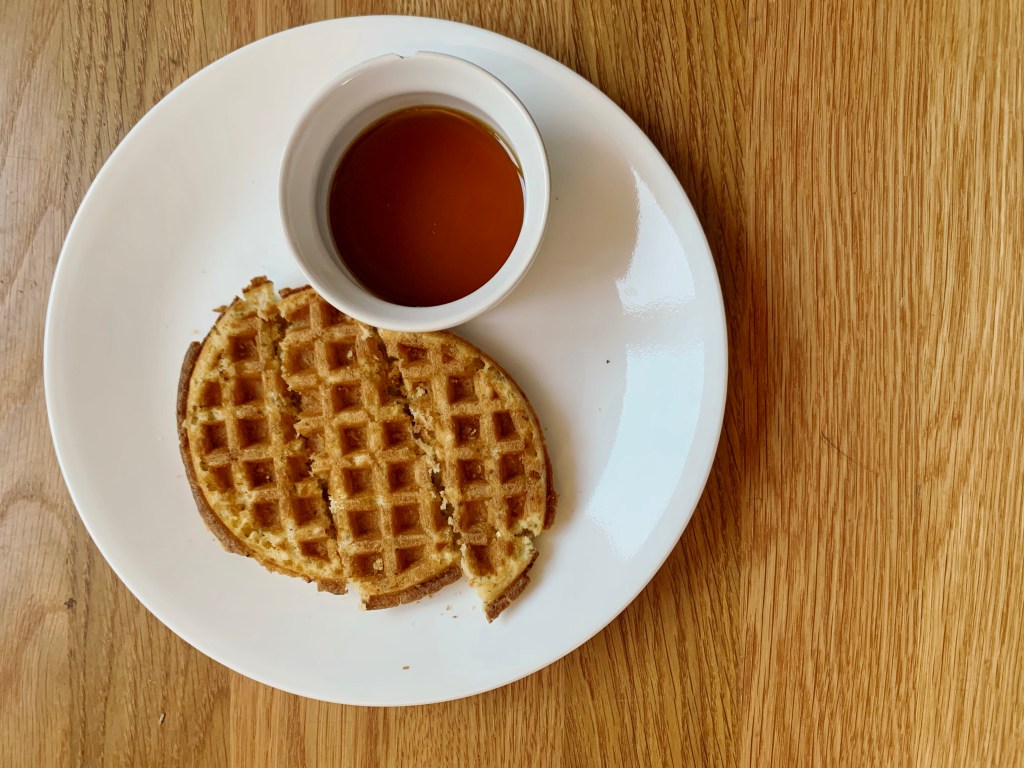
This innocent waffle caused an hour-long rage before school this morning because it wasn’t the right color or texture.

My child has a difficult time regulating her emotions and so very small things become VERY BIG THINGS. It’s tempting to assume “Oh, they’re just being a brat” or that their behavior is a result of some failing on my part as a parent.

The more I learn about trauma and brain science, the more compassion I can have for my child and the more I can show her patience. It’s not easy and I’m always learning more.

The Connected Parent” by Karyn Purvis and Lisa Qualls has been an amazing resource, as well as watching TBRI videos on YouTube.

2021 Book Roundup

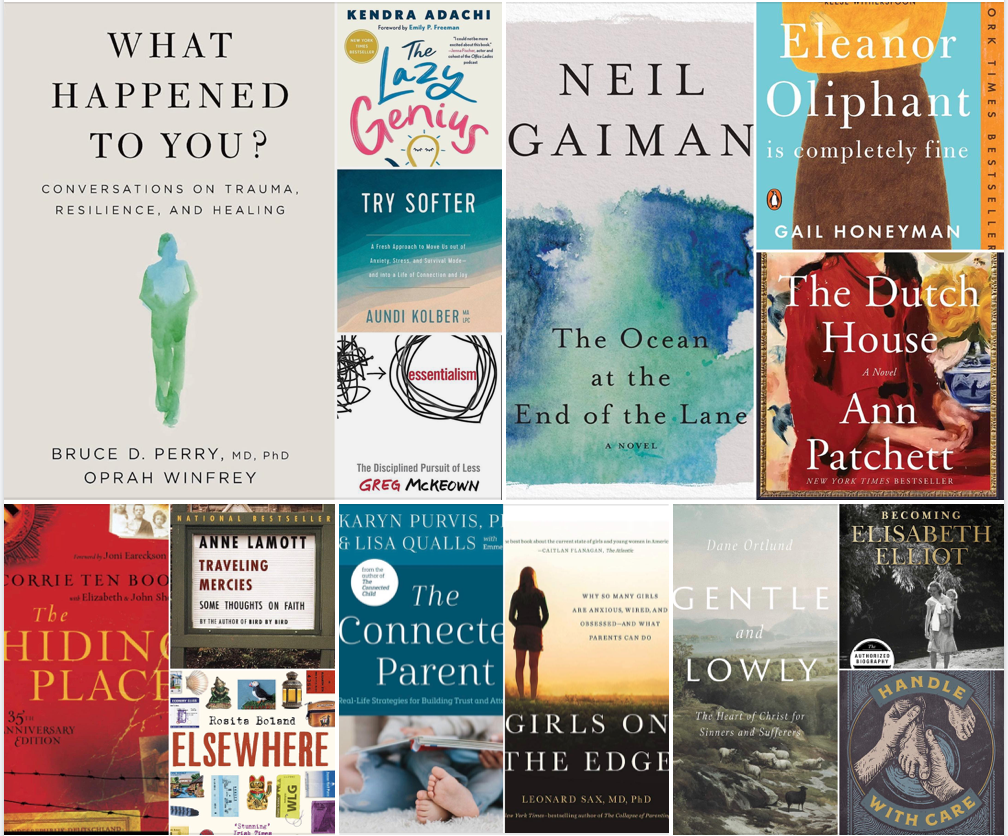
My favorite books of 2021! 📚

General Nonfiction

What Happened to You by Oprah Winfrey, Bruce D. Perry, et al.

The Lazy Genius Way by Kendra Adachi

Try Softer by Aundi Kolber

Esssentialism by Greg McKeown

Fiction

The Ocean At the End of the Lane by Neil Gaiman

Eleanor Oliphant is Completely Fine by Gail Honeyman

The Dutch House by Anne Patchett (specifically the audiobook read by Tom Hanks)

Memoir

Elsewhere by Rosita Boland

Traveling Mercies by Anne Lamott

The Hiding Place by Corrie Ten Boom

Parenting

The Connected Parent by Karyn Purvis and Lisa Qualls

Girls on the Edge by Leonard Sax

Spiritual

Gentle & Lowly by Dane Ortland

Becoming Elisabeth Elliot by Ellen Vaughn

Handle with Care by  Lore Ferguson Wilbert

I’ve had a few questions about how to find time to read. It is tricky with six kids.

• We still have quiet time on school breaks and weekends. That’s when I do a lot of reading. I need that time to recharge and so do my kids!

• I read for about 20 minutes before bed.

• Since we moved and had to purge a lot of things, I’ve been reading a lot of books on my kindle. Libby is a great app to borrow e-books free from your local library. I bring my kindle if I know I’m going somewhere that I’ll have to wait, so instead of mindlessly scrolling on my phone (which I definitely still do), I’ll bring up the kindle app and get a few minutes of reading.

• Audiobooks!! I’ve been using noise-cancelling headphones to listen to so many audiobooks. You can speed up the reading rate (the fastest I can go is 1.75). Your brain gets used to the faster reading so that normal speed sounds incredibly slow. These are my favorite budget noise-canceling headphones.

December Reads

Even though it was the month of December and I was busy with holiday preparations, I managed to read a ton! To be totally honest, it was probably because my kids were home from school for two solid weeks and I went on a lot of walks with my audiobooks.

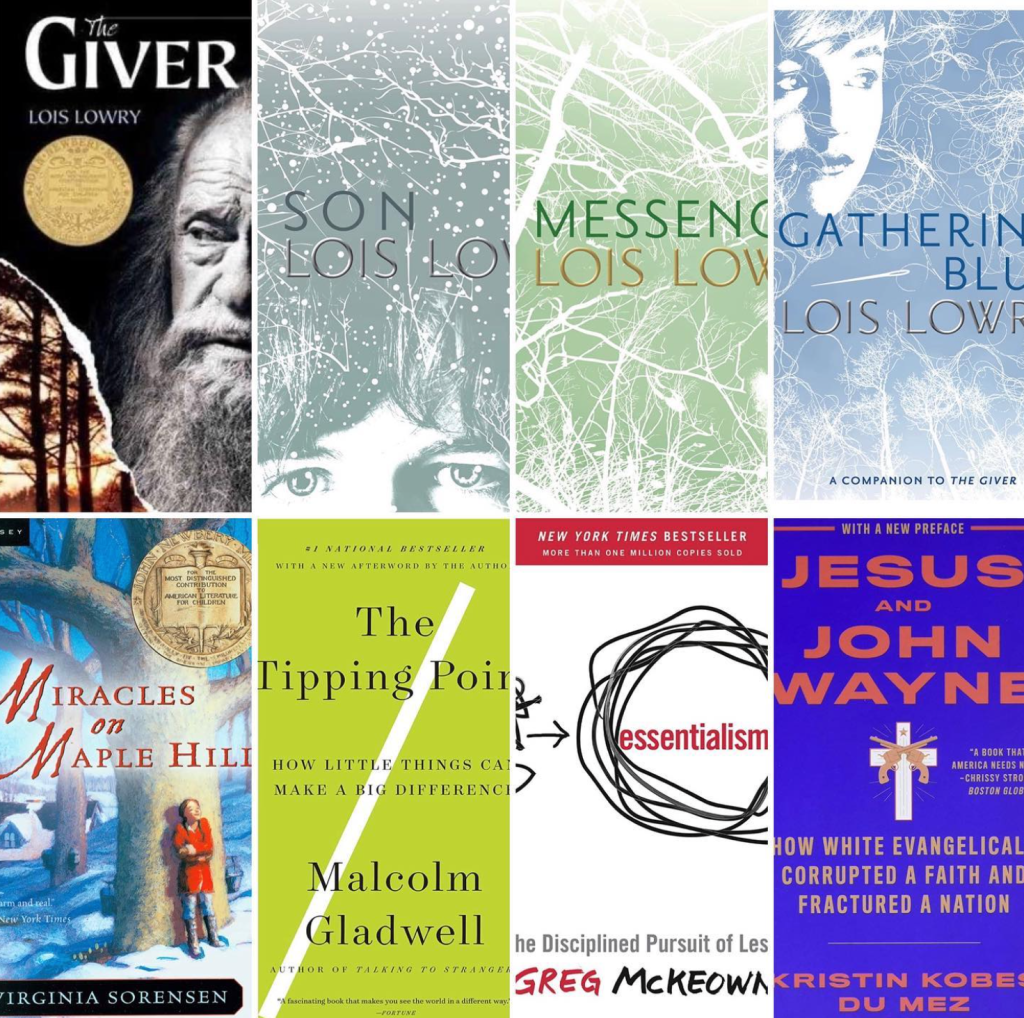
The Giver Quartet: The Giver, Gathering Blue,Messenger, and Son by Lois Lowry — I read The Giver in middle school and remembered it to be part thought-provoking, part very disturbing. Now my middle school son was assigned to read it. He got hooked on the whole series, and pulled me in.

One idea that keeps popping up in the books I’ve been reading in the past few months is the idea that productivity equals value. In our culture people are valued for the productiveness that they bring. If they are disabled, a child, or elderly, and they can’t contribute much, they generally don’t hold much value in the eyes of society. It’s the first thing that usually comes up in conversation: “What do you do?” If you don’t “do” something, the conversation stalls out and you end up talking about the weather, if you’re lucky.

The society in The Giver valued productivity to such an exaggerated degree that it can’t help but shine a reflection on us. How can we change this? How can we learn to value people simply because they are, not for what they can do? I believe these questions are at the heart of why our society is slow to embrace those groups who need a little help, whether because of mental illness, disability, or age.

The Tipping Point by Malcolm Gladwell — Another book that turned out to be very interesting and thought-provoking despite the topic being something I’d never even thought about before: how trends get started, catch on, and become viral. The book was written over 15 years ago, before the age of social media, and I think an update (or even a companion book) on the same topic would be valuable.

Jesus and John Wayne by Kristin Kobes Du Mez — This book was recommended by a friend. The author was provoked to this topic by the election of Donald Trump in 2016. She asks the questions, “How did a libertine who lacks even the most basic knowledge of the Christian faith win 81 percent of the white evangelical vote in 2016? And why have white evangelicals become a presidential reprobate’s staunchest supporters?” I’ve wondered these same things myself, and after reading her book, it makes a lot more sense. Plus, I gained a healthy wariness of Christian leaders that seem wholesome, but often are harboring ugly sin.

Essentialism by Greg McKeown — One of the best books I’ve read this year. It’s basically a how-to for Marie Kondo-ing your life (rather than your sock drawer). There were many take aways, like “To discern what is truly essential we need space to think, time to look and listen, permission to play, wisdom to sleep, and the discipline to apply highly selective criteria to the choices we make.” After reading this, I cut things out of my schedule and honestly haven’t missed them!

Miracles on Maple Hill by Virginia Sorensen — Another book that I read as a child and loved. Now that I’m an adult, I appreciate so much more about it that I missed as a child. It’s the story of a family who relocates from the city to the countryside of Vermont, as the father is trying to recover from PTSD after World War I (I totally missed that part as a kid!). The family finds peace and healing in the simplicity of being in the country, and Marly gets her dad back.

November Reads

November Reads… It was a good month for reading! About half these titles were read thanks to my new noise-cancelling headphones and the Libby app where you can borrow audiobooks from the library. 

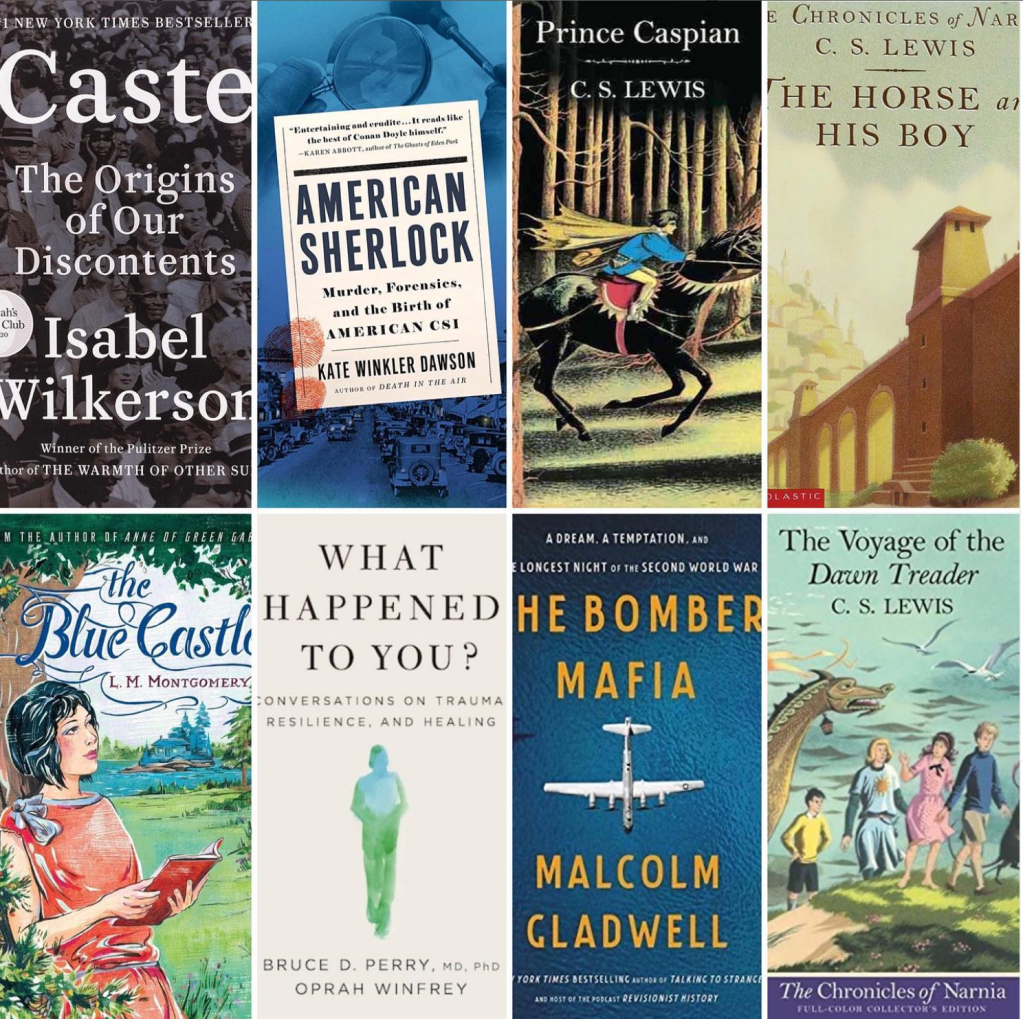
Caste by Isabel Wilkerson — I actually didn’t know what this book was about before I started it. I vaguely assumed it was about the Indian caste system, perhaps explaining how the system kept its structure even after immigration to the US (maybe a good idea for a book?). Instead, it was about how racism in America is actually a caste system. Consider this quote: “Caste is the granting or withholding of respect, status, honor, attention, privileges, resources, benefit of the doubt, and human kindness to someone on the basis of their perceived rank or standing in the hierarchy.” It was definitely eye-opening and was a further course in my education on issues of race in our country.

American Sherlock by Kate Winkler Dawson — A fascinating history of the origin of forensics. It was mostly about Edward Oscar Heinrich, a brilliant and obsessive scientist at The University of Berkeley. I found myself equal parts in awe at his genius, but also a bit sad for his neglected family.

The Chronicles of Narnia: The Horse and His Boy, Prince Caspian, The Voyage of the Dawn Treader by C.S. Lewis — I’ve so enjoyed rereading the Narnia books. I read The Lion, the Witch, and the Wardrobe as a young child, and then the whole series in college fifteen years ago. My experience with reading childhood books over again is that you never really grow out of them, but rather grow into them. I’m amazed at how richer they are after reading them as an adult. I hope to finish the series in this upcoming year.

What Happened to You by Oprah Winfrey and Bruce D. Perry — I highly recommend this book for anyone interested in the brain science behind trauma. It’s been so helpful in understanding my kids with trauma backgrounds. But anyone with abuse, neglect, and trauma in their childhood will benefit.

The Bomber Mafia by Malcolm Gladwell — I absolutely love learning about things I know nothing about. I’ve loved every Gladwell books I’ve read. I knew absolutely nothing about the air bombing campaign of World War II, and I learned a lot about it. There are some critical reviews for this book, saying it’s long-winded, or pointless. I think it’s an enjoyable read if you don’t take it as seriously as a history textbook.