October Books

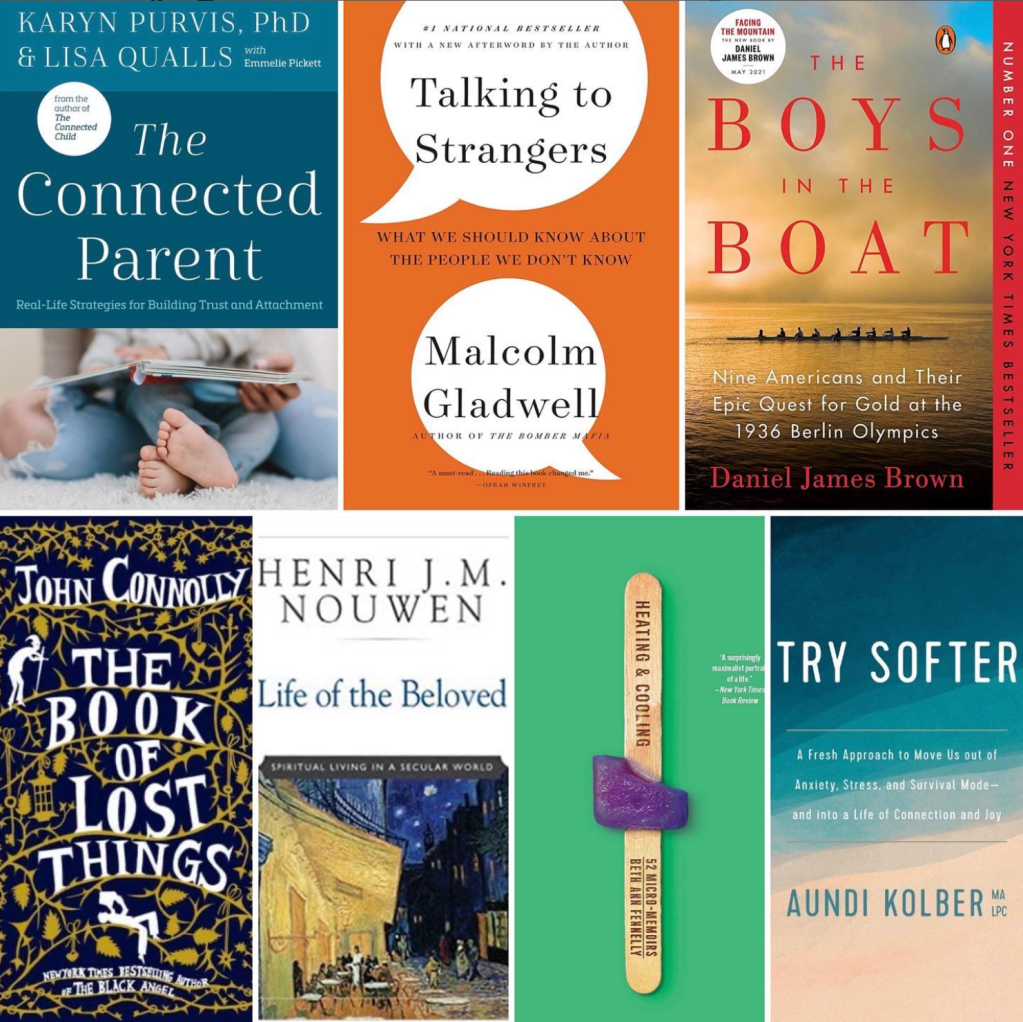
The Connected Parent by Karyn Purvis PhD and Lisa Qualls — This is the follow-up book to The Connected Child, also by Karyn Purvis, released about 13 years before, which had become the basic handbook for adoptive parents. This new update has much of the information as the first book, but with the added benefit being co-written by a mom who has lived through years of the experience of raising challenging adopted children. It’s a book that I read about twice a year and always come back to when I’m at my wit’s end and need encouragement. An absolute must-read for foster and adoptive parents.

Talking to Strangers by Malcolm Gladwell — I totally judged this book by its cover, and thought it was about something along the lines of “how to talk to people you don’t have much in common with.” It turned out to be much more fascinating than that, and in the months since I’ve read it has actually been valuable. Gladwell explores concepts like truth default, why we believe liars, and how knowing more about someone doesn’t mean you are a good judge of character. In fact, it’s more likely that the more you know someone, the less reliably you’re able to judge their character. Here’s a quote: “You believe someone not because you have no doubts about them. Belief is not the absence of doubt. You believe someone because you don’t have enough doubts about them.” I listened to this on audiobook and it was a great listening experience.

The Boys in the Boat by Daniel James Brown — From my favorite genre of narrative nonfiction, this book is about the US Olympic Rowing team that went to the 1936 Olympics. It was a fascinating look at the courage it takes to be a champion rower, and also the politics of WWI and WWII.

The Life of the Beloved by Henri Nouwen — I saw this recommended by a favorite author, Lore Wilbert. This book is a result of Nouwen trying to share God’s love and grace to a friend who didn’t believe in God. It’s full of reminders and encouragement for those of us who do believe.

Heating & Cooling by Beth Ann Fennelly — A book of “52 micro-memoirs”. It was a funny and very enjoyable read.

Try Softer by Aundi Kolber — This was recommended by two of my favorite people- Lisa Qualls (author of The Connected Parent) and Kendra Adachi, author of The Lazy Genius WayI listened to it on Audible, and it was like having a therapist in my ear. I think everyone needs to read Try Softer. It’s basically a how-to for being gentle with yourself, especially if you have trauma in your background. A Christian, trauma-informed therapist is an amazing resource, but if that isn’t possible, this book is the next best thing. I will probably be revisiting it annually.

September Books

Women, Food & Hormones by Sara Gottfried, MD — This was mainly a book on why women should eat a keto diet. It would be good for someone trying to figure out health issues caused by hormone imbalance (low energy, stuck weight). It’s a month of counting carbs and ketones, so not for me.

Securely Attached by Mike & Kristin Berry — A must-read for any foster or adoptive parent. I wish this book was around when were first became foster parents!

I Am Malala by Malala Yousafzai — I read this because it’s on my kid’s reading list and I wanted to (finally) see what it was all about. I found it very interesting and it helped me understand more of what is going on in the Middle East.

Handle with Care by Lore Ferguson Wilbert — This is a good read for anyone averse to touch for whatever reason (sensory, trauma, etc). I better understand the value of touch and have tried to be more okay with hugging.

Brainstorm by Daniel Siegal — This was very helpful for understanding adolescent brains, why they do things like risk-taking behaviors, and healthy ways of helping their brains get what they need.

Thy Rod and Thy Staff They Comfort Me by Samuel Martin — I read this as part of a parenting book I’m in. This book takes a look at the origin of many of the verses in the Bible that are either mis-translated or taken out of context, that some Christian parenting books use as a basis for spanking children as punishment. It confirmed some of the conclusions I had come to myself as a result of reading more about attachment and adoption parenting.

The Passenger Seat

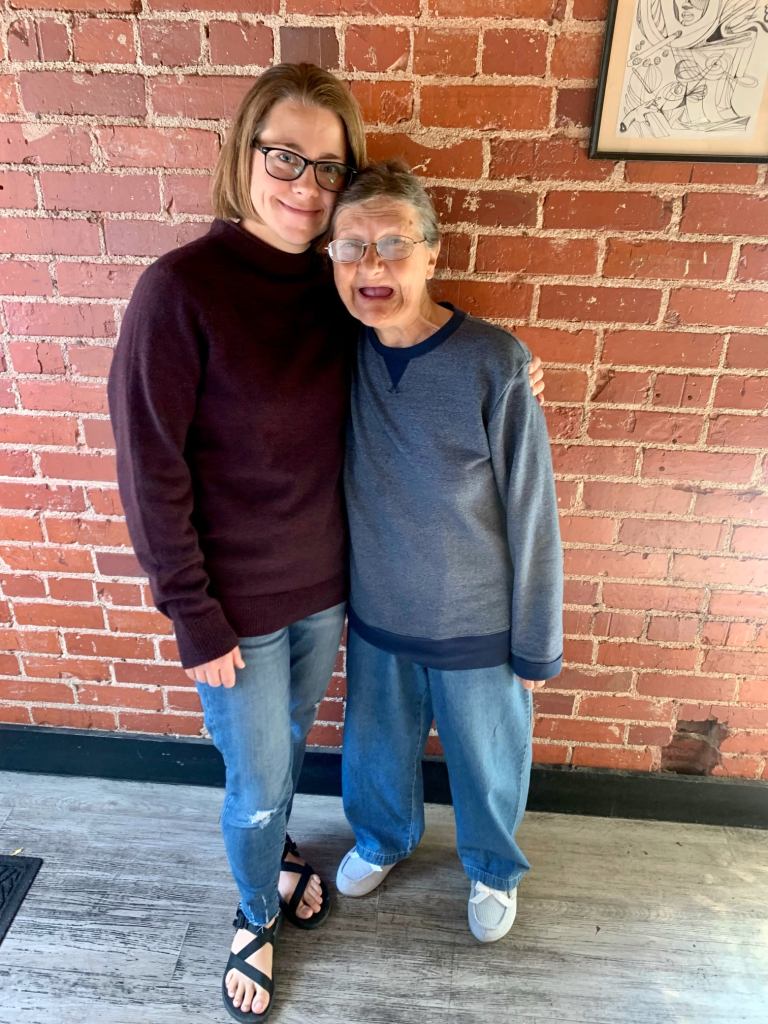
This weekend I took my elderly mom driving. She hasn’t driven her car since she was hospitalized with covid back in March, and she needed the practice.

At first, it was just what you’d picture with a new driver: first finding a deserted parking lot, switching drivers, the tentative gas pedal, unsure steering. Finally she got her confidence and was driving around the roads like an old pro. (Pun intended.)

As with so many situations of these past few months, it was surreal to be in the passenger seat of this equation. It was just a few years ago that I was the new driver, and my mom was white-knuckling her way through deserted parking lots, hoping her teenager didn’t hit something. (I didn’t. I was a great driver.)

There is a strength and a humility in growing elderly. I imagine it’s not easy to surrender to all the things that you need help with- having your kid help you drive, help you grocery shop, help with your bills. My mother is someone who has always had pride in her independence. After all, she was a single mom and did everything herself. Now it’s my turn. And I hope that I’ll have the same strength when I grow old.

August Books

August was an interesting month of reading. Even though it was a crazy month, with getting five kids ready for a new school year and also moving my elderly mom out from Connecticut to Idaho. Even so, I had huge portions of time to read (like two 8-hour long flights!)

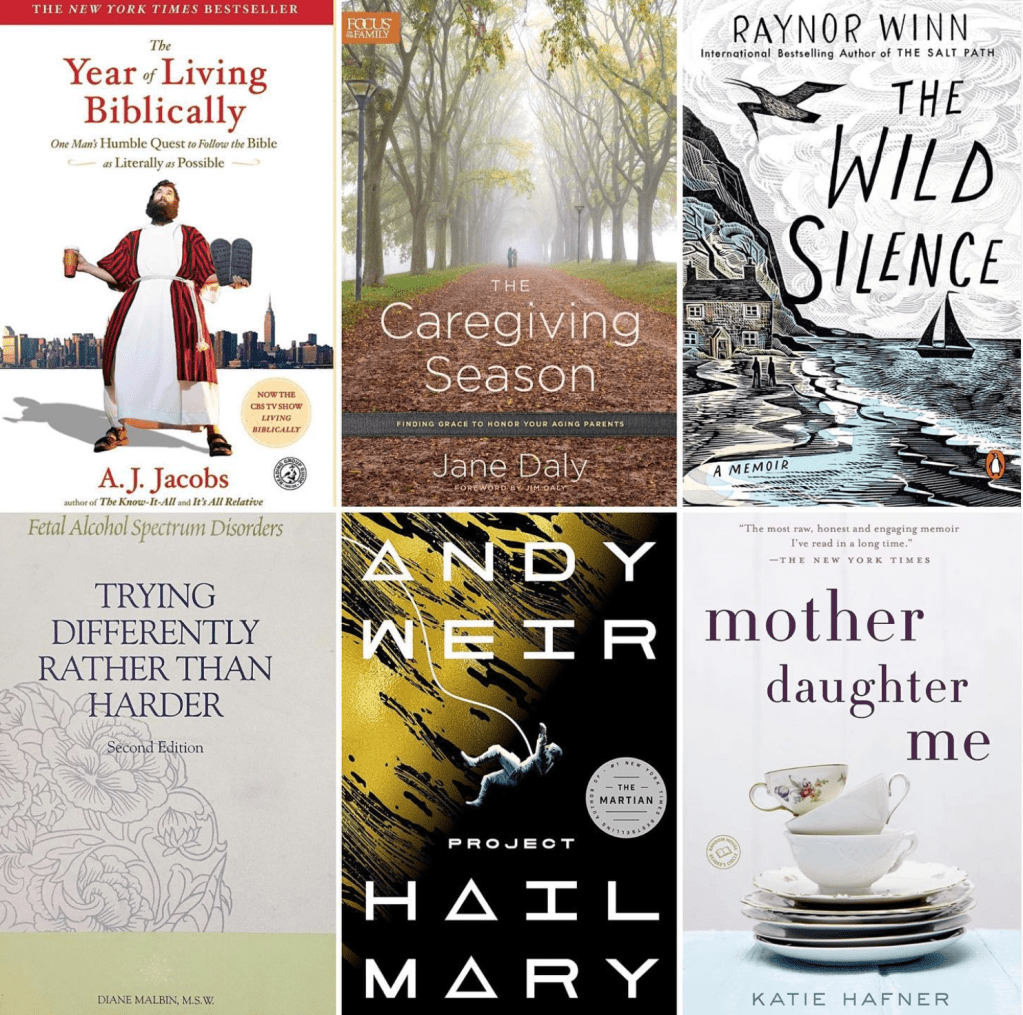
The Year of Living Biblically by A.J. Jacobs — This was a random thrift store find. It’s about a man who decides to live according to the Bible – as literally as possible – for a year. I had low expectations, figuring at best t was a lighthearted poke at the hard-to-understand parts of the Bible. But I found parts of it pretty fascinating. I learned about many Jewish rules in the Bible that people still follow today, like the admonition to not mix linen and wool (there is actually an expert in the field who travels to people’s homes and examines their garments to make sure there aren’t any offending fibers.) It was humorous, but also interesting.

The Caregiving Season by Jane Daly — A very encouraging book for anyone finding themselves suddenly thrown into the roll of caregiving for a parent. One of the best I’ve read so far.

The Wild Silence by Raynor Winn — The follow-up memoir to The Salt Path, which I loved. I found myself losing interest in this book. Like a hiker without a destination, it was more of a ramble without a clear objective.

Trying Differently Rather Than Harder by Diane Malbin — A book about the symptoms and strategies for managing behavior of people with Fetal Alcohol Syndrome Disorder. We learned just recently that it’s very likely that our 3 adopted children have FASD (and likely my mother as well). I read this book to try to fit in more pieces to puzzle of how to deal with behaviors that don’t respond to typical parenting. Highly recommended for any parent with a child on the FASD spectrum.

Project Hail Mary by Andy Weir — I almost never read sci-fi, but this one caught my attention because it came highly recommended by someone who also never reads sci-fi. It’s about a man who wakes up from a coma on a spaceship and slowly unravels memory to find his mission objective. There is a type of (space fungus? energy? matter?) that is sapping our sun’s energy, but not Tau Ceti’s, a star which is not being affected by the space fungus and is 12 light years away. He needs to figure it out and send the information back to earth before everyone on the planet dies in a planet-wide ice age. It reminded me of my high school days when I found theoretical physics discussions endlessly fascinating, dreaming of what possibilities lay ahead of us.

Mother Daughter Me by Katie Hafner — I love memoirs. I love learning about other people’s lives and the lessons they’ve taken away from their hard experiences. Since I’m going through my own journey with my mom, I found this memoir especially relevent. Katie’s book is about the year that she, her 16 year old daughter, and her elderly mother move into the same apartment. I was reassured by her description of having to confront her own emotions about her neglectful upbringing. There are so many up and down emotions involved with mothers and daughters, and this book was like chatting with a good friend going through a similar situation as myself.

My Mom.

Remember when blogs were a place to post about what’s going on in your life? I’d like to get back to that, so I’ll be getting more real and sharing more about our life.

Just a few weeks after we moved to Idaho back in April, I got a call from my mom’s neighbor. She told me that my mom was in the hospital and needed help. That would be a shock to anyone. But for me it was a double shock because I hadn’t spoken to or seen my mom in 17 years, by her request. (In a nutshell: I was ‘disowned’ because of my marriage to Mark back in 2004. It’s a long story spanning my whole childhood, with a lot of abuse, trauma and mental illness involved).

I called my mom in the hospital, we reconnected, and amazingly she accepted my offer of help. I flew out to Connecticut and realized she needed to move close to me in Idaho. We made a plan, and two months later she moved to an apartment two minutes away from our house. Now I see her several times a week to drop off meals, take her shopping, or just stop by with a kid or two. She has connected with my kids, her grandkids, whom she had never met before.

One day she was over here helping Poppy read and it struck me how incredibly surreal the situation was. Thankfully she is different than when I was a kid. All these years I’ve been praying that God would send someone to help my mom. I knew she was getting older and probably not living well on her own. I never imagined that person would be me! Our issues aren’t totally fixed, because this is real life. A relationship is there, but not totally restored. But I’m thankful that I’m able to help my mom at this time in her life when she needs it most.

I’m a homeschool mom dropout.

Trying on their new uniforms (the toddler is just playing along)

It’s August, and that means many homeschoolers are getting ready to get back to the books. As a homeschooler, I would have started up our school year in early July, just about the time the weather gets unbearably hot and the beaches are unbearably crowded. I would have started researching new curricula back in May, and waited impatiently for it to arrive box by box throughout June. 

But I’m not a homeschooler anymore. This year will look different because all five of my school-aged kids are attending school for the first time in their lives. Instead of boxes of homeschool books, we opened up packages of school uniforms. Instead of spending hours laminating schedules and planning reading lists, I read books just for fun and took my kids to the pool.

This decision to stop homeschooling was a few years in the making. It was a hard decision. Being a homeschool family wasn’t just abut how my kids were educated, it had become my identity. And it wasn’t easy to give up that part of myself. It took the Pandemic Summer of 2020 to finally make me realize that I can’t homeschool anymore. 

That summer we started school in July like we always do, but this year things were different… we were fostering a needy toddler, and had a 6-year-old special needs child who couldn’t sit longer than two minutes before getting distracted by a sound or an itch; an 8-year-old with ADHD, severe dyslexia and dys-everything-related-to-learning (along with attachment issues that made trying to teach her incredibly hard on both of us); a 4-year old begging me to teach her to read; a 7th grader, and a high schooler.

Add on to all of that a pandemic which made it impossible to go anywhere fun, constant heat waves, and nearby wildfires that brought pending evacuation orders. 

In September we went on a road trip to Idaho to visit friends, fell in love with their town, and learned about a school there that teaches special needs children. So we decided to move and put our kids in the school the following school year. Just like that.

We probably sound a bit crazy when we tell people that we moved just for a school, and on the surface it sure does sound crazy. But we didn’t have any education options in California. I wasn’t able to homeschool my special needs kids independently anymore. The charter school that I homeschooled through didn’t offer any homeschooling help for special needs students. In fact, after going through a several-month evaluation process with our homeschool charter, all they could offer was… sending her to public school. The special education department at our local public school is notoriously terrible.

Public school wasn’t an option for our other children because of the social and spiritual clean-up we would constantly be doing with their exposure in the California schools. Sadly, the local Christian schools didn’t have any learning options for special needs students. (Shouldn’t Christian schools be at the forefront of helping these special kids??)

So here we are in Moscow, Idaho, looking forward to a new school year starting in a few weeks. It is such a relief to know that someone else will be teaching my children this year. It is no longer my job to study my children, figure out their strengths, weaknesses, and learning styles. To track down special curriculum and learning methods to help them learn. And then to figure out how to fit it all into a day, along with a preschooler and toddler.

My children will be taught by people who, just like me, care deeply about education and Christian values. And they are trained in teaching methods for special needs children and in their sensory needs. My girls will be getting one-on-one tutoring for reading. They will be around other kids just like them and other families just like ours. We have met many of the staff members and families at our new school and felt so welcomed by them. I feel amazingly lucky to be in this new community. I’m looking forward to a great year of learning for all my kids!

July Books.

This month was a slow one for reading. I let a lot of distractions get in the way of reading, a mistake I won’t be making again in August!

The Hidden Life of Prayer by David McIntyre — (Audiobook listen for me) Very convicting and great encouragement to keep steadfast in prayer.

At Home in the World by Tsh Oxenreider — I’ve heard about this book for a few years and so was excited to finally read it, especially given how widely it was promoted. I thought it was something like a guide for how people can travel the world with their kids. Or at least would be relatable and inspiring. But in fact, it was clear that Oxenreider’s year of travel isn’t really attainable for ‘normal’ people, even though her writing seems aimed at inspiring others to do the same as she did. The effect was that the reader feels somewhat shamed at not being able to travel while also feeling a bit jealous of Oxenreider’s adventures. I wish the tone of the book was different! 

A Life Less Ordinary by Baby Halder — A random find at a thrift store. A memoir about an Indian woman married off to an abusive man at age 12, became a mother at 14, and eventually found the courage to make her own life. She wrote her memoir thanks to the help of a compassionate benefactor who encouraged her to learn to read and write and tell her story. It was a super interesting read, especially since I didn’t know much about this part of Indian culture. 

Of Mice and Men by John Steinbeck — I first read this book in high school and found it powerful and sad. But now as a parent of a special needs child, it hit much harder. It’s a very quick read and worth revisiting as an adult.

June Books.

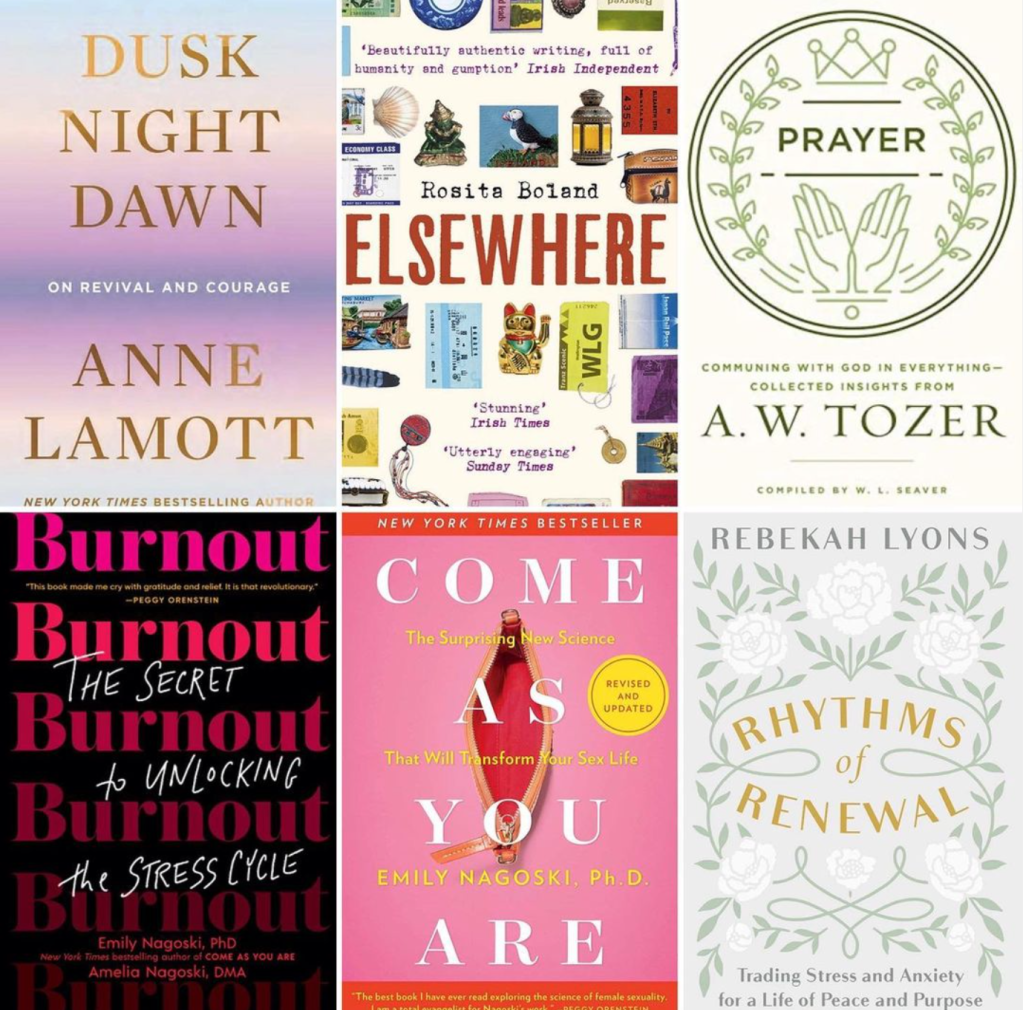
Dusk Night Dawn by Anne Lamott — I love Lamott’s writing so much. Like this quote, “Taking kids outside to love God in nature is just about the most Jesusy thing we can do. Jesus was nearly always outside with His disciples or alone with the stars. To take kids to a beach, even one that is littered, is to bring them to an altar, a big one, surrounded by the blue-gray ocean billowing outward like a skirt, flecked with sunlight, like foil or diamonds.”

Elsewhere by Rosita Boland — Recently I’ve realized that one of my favorite genres is travel memoir, and this is one of the best I’ve read. It’s a shame it isn’t more popular (searching for the title on Amazon brings up about twenty hits, none of which are this book, weirdly). Boland absolutely loves words and travel… Her introduction is about Fernweh, a German word that means “the ache of not being in foreign parts, a desire to travel, an ache for distant places. Each chapter is a different travel adventure paired with some amazing word like Eleutheromania (“an intense desire for freedom”). Besides her adventures, she also shares about her disappointment in losing her dream of motherhood, and learns to accept herself and be content with her life. 

Prayer  by A.W. Tozer — I always need encouragement in the area of prayer. This book is made of excerpts from Tozer’s other books or sermons on the topic of prayer, along with commentary and reflection. Each chapter is bite-sized enough to work well as a devotional. Tozer’s idea is that prayer should be a way of life, woven into the very fabric of every detail of our day. He writes “Some churches now advertise courses on how to pray. How ridiculous! That is like giving a course on how to fall in love.” It’s a book I will likely be rereading through the years.

Burnout by Emily Nagoski and Amelia Nagoski — This book is so good, and so dense that I could only read it in bite-sized chunks over a few months. I read it on Kindle and have so many highlights in all the chapters that I might as well have just highlighted the whole book. It’s like your own therapist in a book who walks you through things like how to overcome trauma and completing the stress cycle so it doesn’t get stored in your body. I didn’t love the overly-feminist attitude of the book, but it was good besides that.

Come As You Are by Emily Nagoski — Examines new scientific discoveries that show how women feel about their bodies directly influences sexual satisfaction. Biggest takeaway: You’re not broken. You’re normal. Now let’s try using what we know about women’s brains and bodies to make sex better. I found this book very helpful (though I’ll keep the specifics to myself!) I’d always felt like parts of my intimate life were broken, and someday I’d get around to figuring out how to fix them. But they’re not, and I’m not. I’m normal!

Rhythms of Renewal by Rebekah Lyons — I first read this book years ago as a much younger mom and just reread it this month with a foster/adoption group I’m in. It was only in rereading it that I realized that this book helped create many of the renewing habits I use today. Things like taking a walk to clear my head, having a calm morning routine to get my mind ready for the day, practicing Sabbath, clearing extra junk out of my day and my life to make more space for my passions. Some of the suggestions are obvious, but I think it’s helpful sometimes for someone else to point out the obvious and give an extra little kick in the right direction.

We Take a Road Trip and Decide to Move.

I wrote this post back in October 2020, but never posted it. So much has happened since then! 

We returned a week ago from a road trip to Idaho. The trip was an escape from California, which seemed like it was mostly on fire at the time we planned it. At this point we’d had about two months of constant smoke from wildfires and unbearable heat from wave after wave of high temps (including one week of 105+ days). Not to mention a pandemic that prevents us from going anywhere indoors. It was too hot even at the beach. That’s how you know things are bad.

We were pretty much trapped in our house with eight people and I was itching to go somewhere. Anywhere. We have friends in both North Idaho and southern Idaho that we’d been promising to visit for a while, so this seemed like the perfect time to make good on those promises.

When we arrived in Moscow where our first set of friends live, something clicked in me. Or more accurately, something broke in me. I felt cool, crisp air for the first time in what seemed like years. It smelled like fall… dew and leaves and a bit of smoke from a wood-burning stove (not from a thousand-acre wildfire). The longing for a cooler climate that I’d been feeling for years suddenly broke free and I couldn’t bury it anymore. 

We looked up house listings (this is a common pastime for Californians, who find it entertaining to compare the low house prices in other parts of the country to our super inflated mortgages). It turns out that houses were pretty reasonable in Moscow (compared to California). In the span of about two days, the idea of moving out of California went from being a “someday” idea to a “Hey, we can actually do this now” idea.

The more we found out about Moscow the more we agreed it was a good idea. The people, the climate, the church. I looked up homeschooling groups. I didn’t find much in the way of a homeschool community, but I did find out about a Christian school for special needs children in Moscow called The Jubilee School. It looked like everything I’ve ever wanted for an education for my kids, special needs and otherwise. I arranged an appointment to talk to the director of the school on the phone, which happened during our drive home. I talked to a few parents of children that attend the school. It was then I realized that maybe this school was the answer to our educational struggles with our special needs kids.

We returned home and bounced around ideas about how we could make this move a reality. A month later, we had a very solid plan, which was to start looking for a house in late winter. We wanted to move no later than July, to allow the kids time to get used to their new environment before school starts in August. And so, we’ve started sorting and purging and acclimating to the idea of a new future.

May Books.

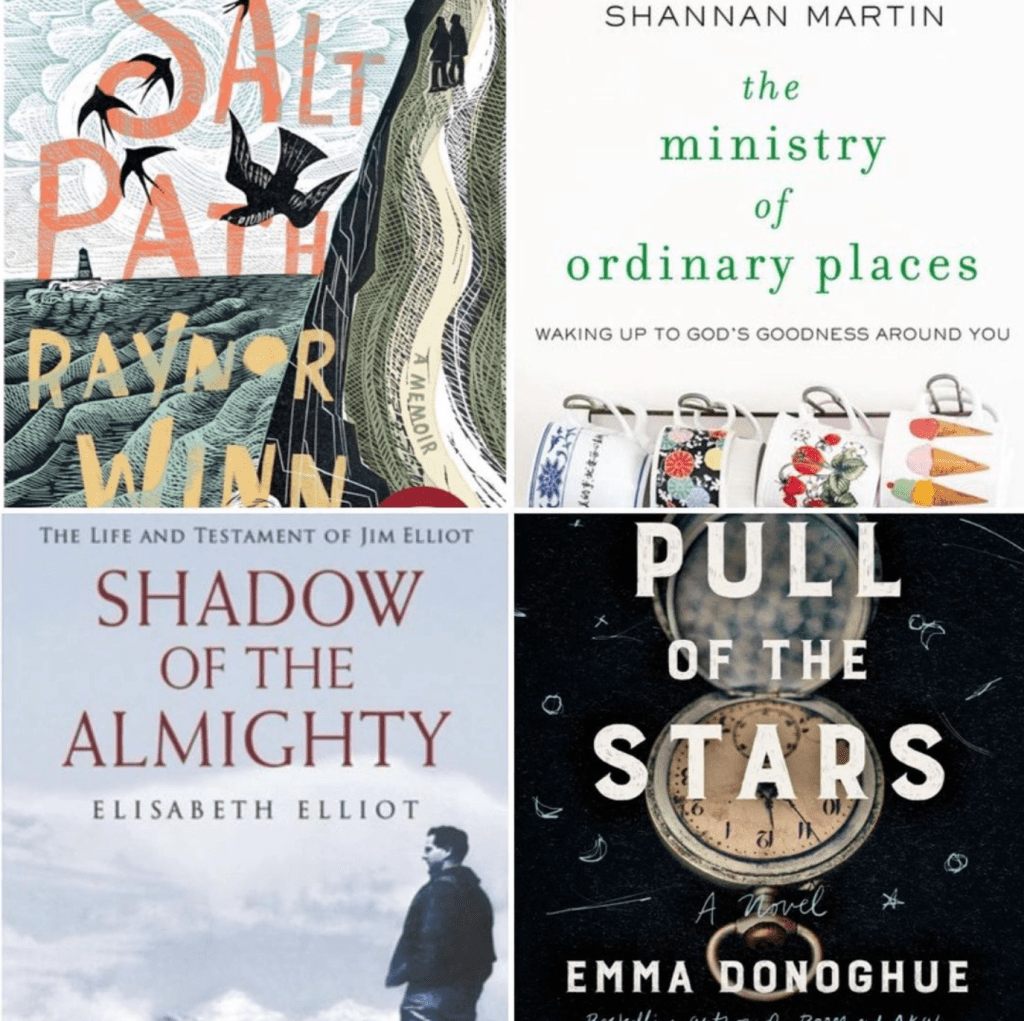
The Salt Path by Raynor Winn — A memoir about a husband and wife who lose their home and get a terminal diagnosis in the same week. They decide to drop everything and hike England’s South West Coast Path, some 640 miles. It was an interesting read, especially her descriptions of nature and camping. 

The Ministry of Ordinary Places by Shannan Martin — It was highly recommended by a few trusted sources, but I had a really hard time with this book. The author uses a lot of words without saying very much. As much as I love authors like Anne Lamott for their candor and down-to-earth writing, authors like Martin leave me confused and annoyed.

Pull of the Stars by Emma Donoghue — About a Dublin maternity ward nurse in 1918. This would have been a great timely historical fiction about nursing during the Spanish Flu if the author hadn’t pulled a random woke climax out of a hat at the last minute. The climax was so out of place that it seemed like the author set out to write a completely different ending, but was influenced at the last minute to make the book “relevant to the times”. 

Shadow of the Almighty by Elisabeth Elliot — A fascinating look into Jim Elliot’s life through his own journals and letters. It is so convicting and encouraging to read about such a young person having a strength of faith far beyond his years.