
Even though it was the month of December and I was busy with holiday preparations, I managed to read a ton! To be totally honest, it was probably because my kids were home from school for two solid weeks and I went on a lot of walks with my audiobooks.
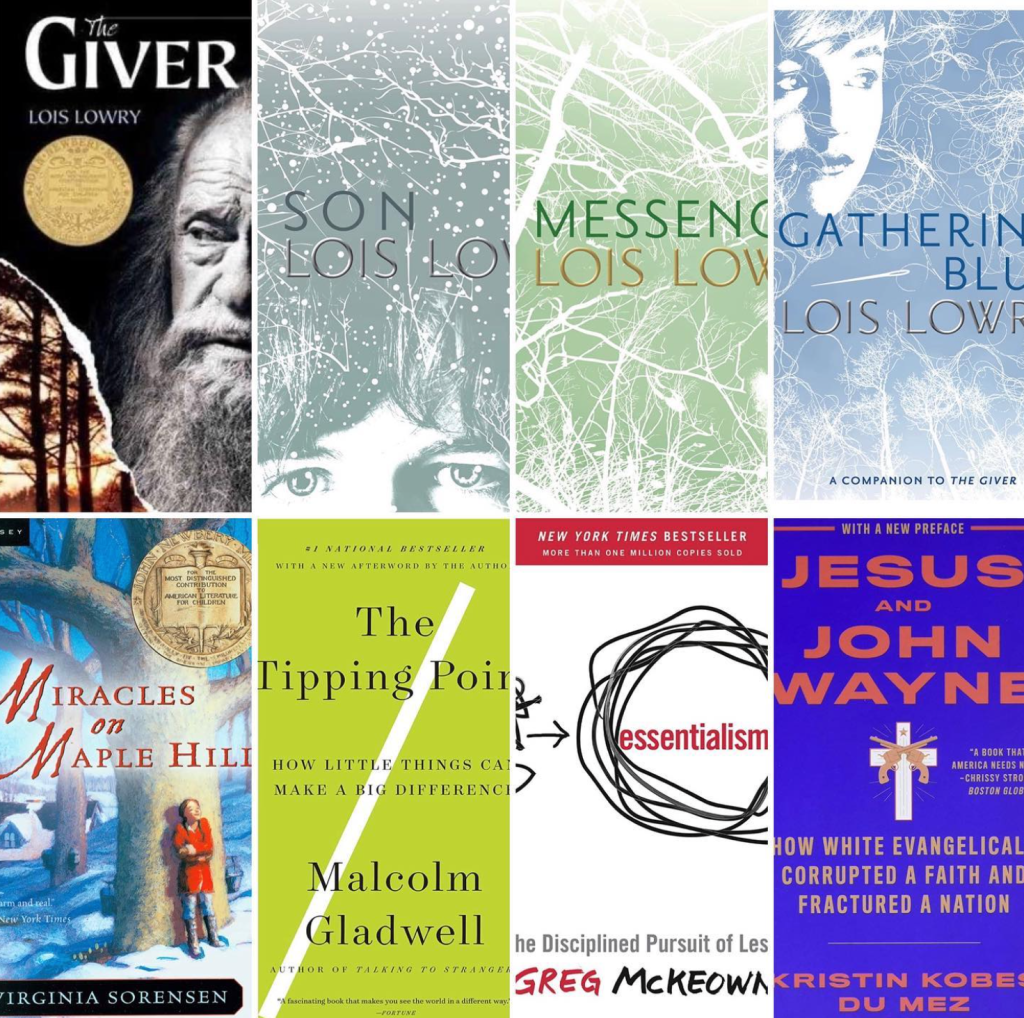
The Giver Quartet: The Giver, Gathering Blue,Messenger, and Son by Lois Lowry — I read The Giver in middle school and remembered it to be part thought-provoking, part very disturbing. Now my middle school son was assigned to read it. He got hooked on the whole series, and pulled me in.
One idea that keeps popping up in the books I’ve been reading in the past few months is the idea that productivity equals value. In our culture people are valued for the productiveness that they bring. If they are disabled, a child, or elderly, and they can’t contribute much, they generally don’t hold much value in the eyes of society. It’s the first thing that usually comes up in conversation: “What do you do?” If you don’t “do” something, the conversation stalls out and you end up talking about the weather, if you’re lucky.
The society in The Giver valued productivity to such an exaggerated degree that it can’t help but shine a reflection on us. How can we change this? How can we learn to value people simply because they are, not for what they can do? I believe these questions are at the heart of why our society is slow to embrace those groups who need a little help, whether because of mental illness, disability, or age.
The Tipping Point by Malcolm Gladwell — Another book that turned out to be very interesting and thought-provoking despite the topic being something I’d never even thought about before: how trends get started, catch on, and become viral. The book was written over 15 years ago, before the age of social media, and I think an update (or even a companion book) on the same topic would be valuable.
Jesus and John Wayne by Kristin Kobes Du Mez — This book was recommended by a friend. The author was provoked to this topic by the election of Donald Trump in 2016. She asks the questions, “How did a libertine who lacks even the most basic knowledge of the Christian faith win 81 percent of the white evangelical vote in 2016? And why have white evangelicals become a presidential reprobate’s staunchest supporters?” I’ve wondered these same things myself, and after reading her book, it makes a lot more sense. Plus, I gained a healthy wariness of Christian leaders that seem wholesome, but often are harboring ugly sin.
Essentialism by Greg McKeown — One of the best books I’ve read this year. It’s basically a how-to for Marie Kondo-ing your life (rather than your sock drawer). There were many take aways, like “To discern what is truly essential we need space to think, time to look and listen, permission to play, wisdom to sleep, and the discipline to apply highly selective criteria to the choices we make.” After reading this, I cut things out of my schedule and honestly haven’t missed them!
Miracles on Maple Hill by Virginia Sorensen — Another book that I read as a child and loved. Now that I’m an adult, I appreciate so much more about it that I missed as a child. It’s the story of a family who relocates from the city to the countryside of Vermont, as the father is trying to recover from PTSD after World War I (I totally missed that part as a kid!). The family finds peace and healing in the simplicity of being in the country, and Marly gets her dad back.
 Autumn's Writing